Kid-Friendly Pediatric Dentist in West Concord, With Follow-Up Care
We care for kids from the first tooth through the teen years: exams and cleanings, fluoride and sealants, fillings, crowns, extractions and sedation when a child needs it. Families come to us from Acton, Concord and nearby towns. Once treatment is done, we explain how to care for the work and check back to see how your child is doing.
From First Call to Follow-Up
Here is how a visit with us runs, start to finish.
- 1
Register by phone
Call us to set up your child as a new patient. We ask about medical history, any allergies and your insurance, and book a time that suits your family.
- 2
The first visit
We count teeth, check the gums and bite, and look at how the jaw is developing. For babies and toddlers this is often a knee-to-knee exam with your child in your lap.
- 3
A clear plan
If we find something, we explain it with the x-ray or a photo and lay out the options. Nothing is done that day unless you agree to it.
- 4
Treatment
We numb gently, work in short steps and talk your child through each part.
- 5
Care instructions and check-in
You leave knowing how to look after the work and what is normal over the next few days. Then we check back to see how your child is doing and answer anything that came up.
Dental Care Sized for Growing Mouths
Our office has more than 11 years in practice, and our board-certified pediatric dentists treat only children and teens. That focus matters because baby teeth have thinner enamel than adult teeth, so a small spot of decay can reach the nerve faster. Our services run from preventive care like fluoride treatment and sealants to restorative work such as fillings, pediatric crowns, root canals and space maintainers. We also handle extractions, frenectomies for tongue-tie and lip-tie, and sedation dentistry for kids who need extra help staying comfortable.
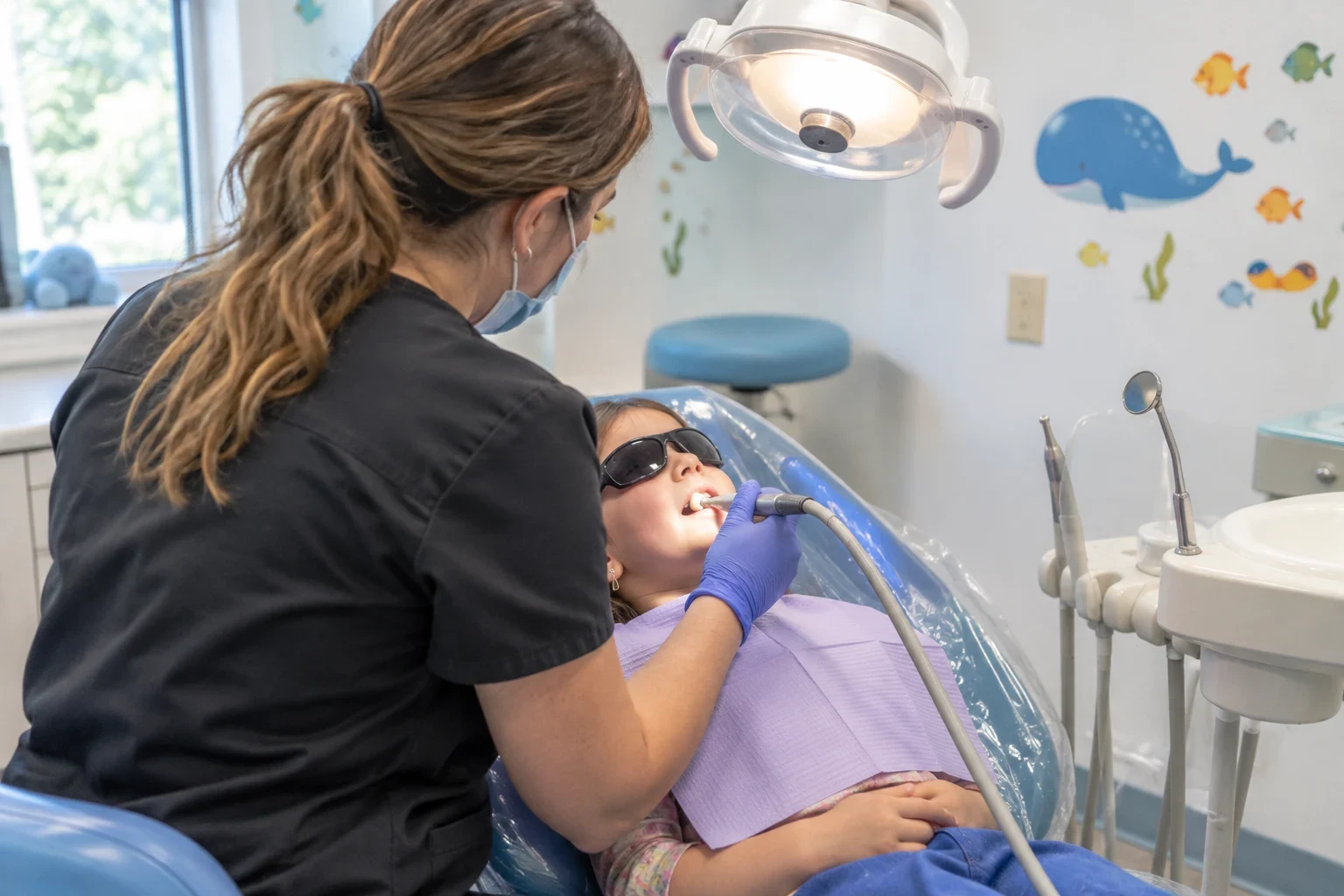
Exams & Cleanings
Regular checkups that remove tartar, catch early decay between teeth and leave you with specific brushing and flossing notes for your child.
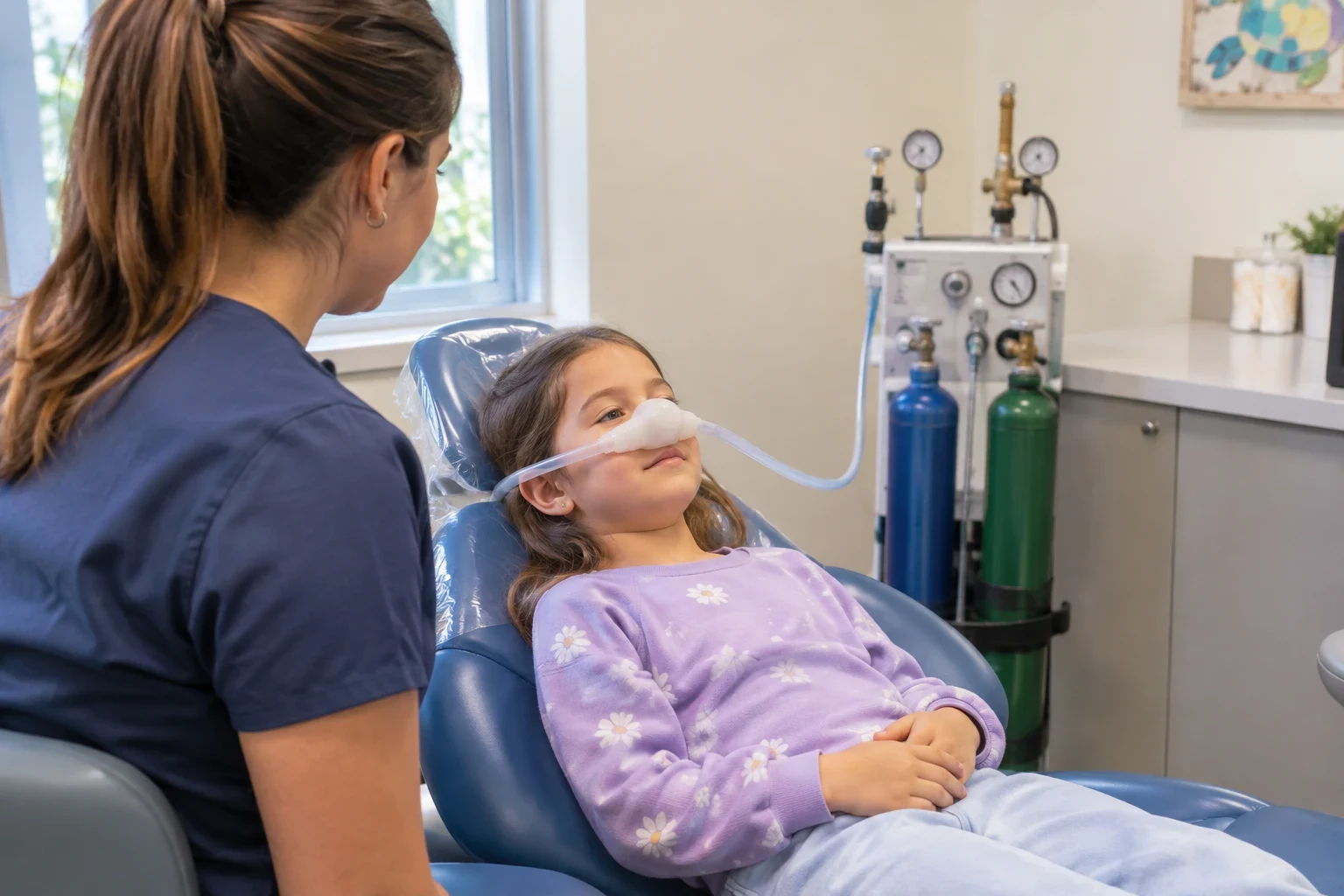
Sedation Dentistry
Nitrous oxide and other sedation options that help anxious or very young kids get needed dental work done comfortably, with monitoring and a check-in by phone.
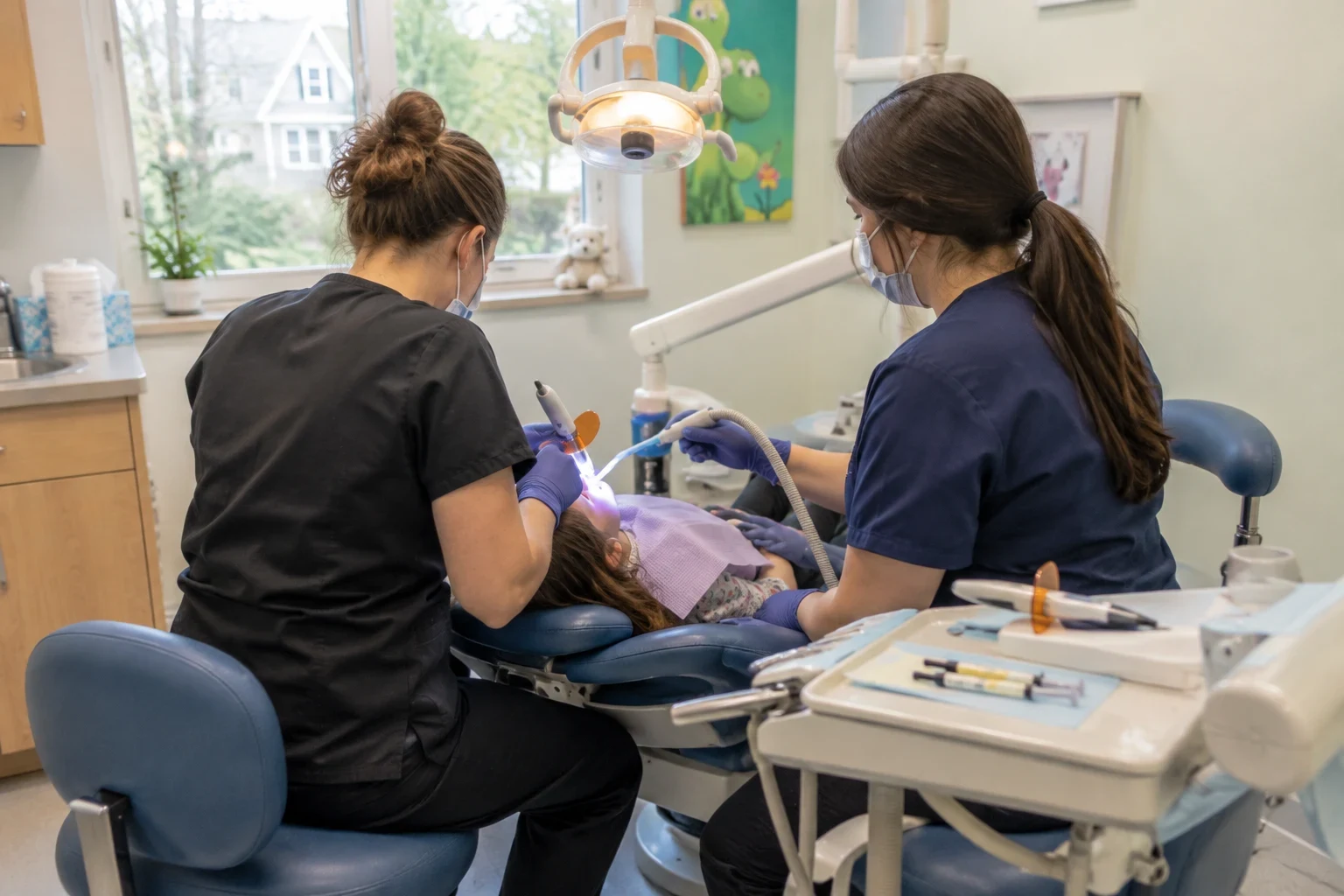
Fillings
Tooth-colored fillings that stop decay in baby and permanent teeth, placed with gentle numbing and followed by a call to see how your child is doing.
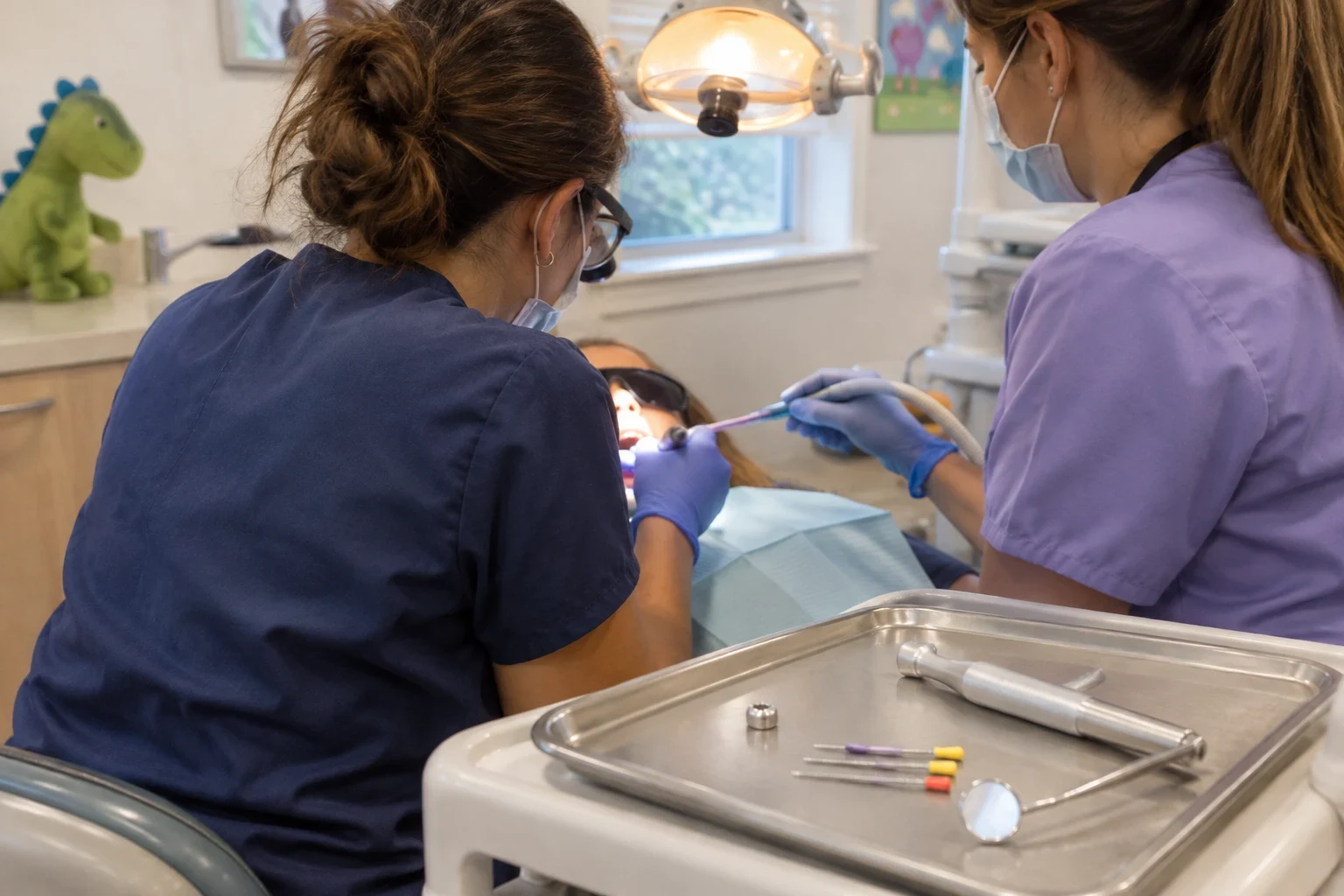
Root Canals
Pulp therapy that removes infected nerve tissue from a baby or young permanent tooth, seals it, and keeps it in place until it is ready to come out.
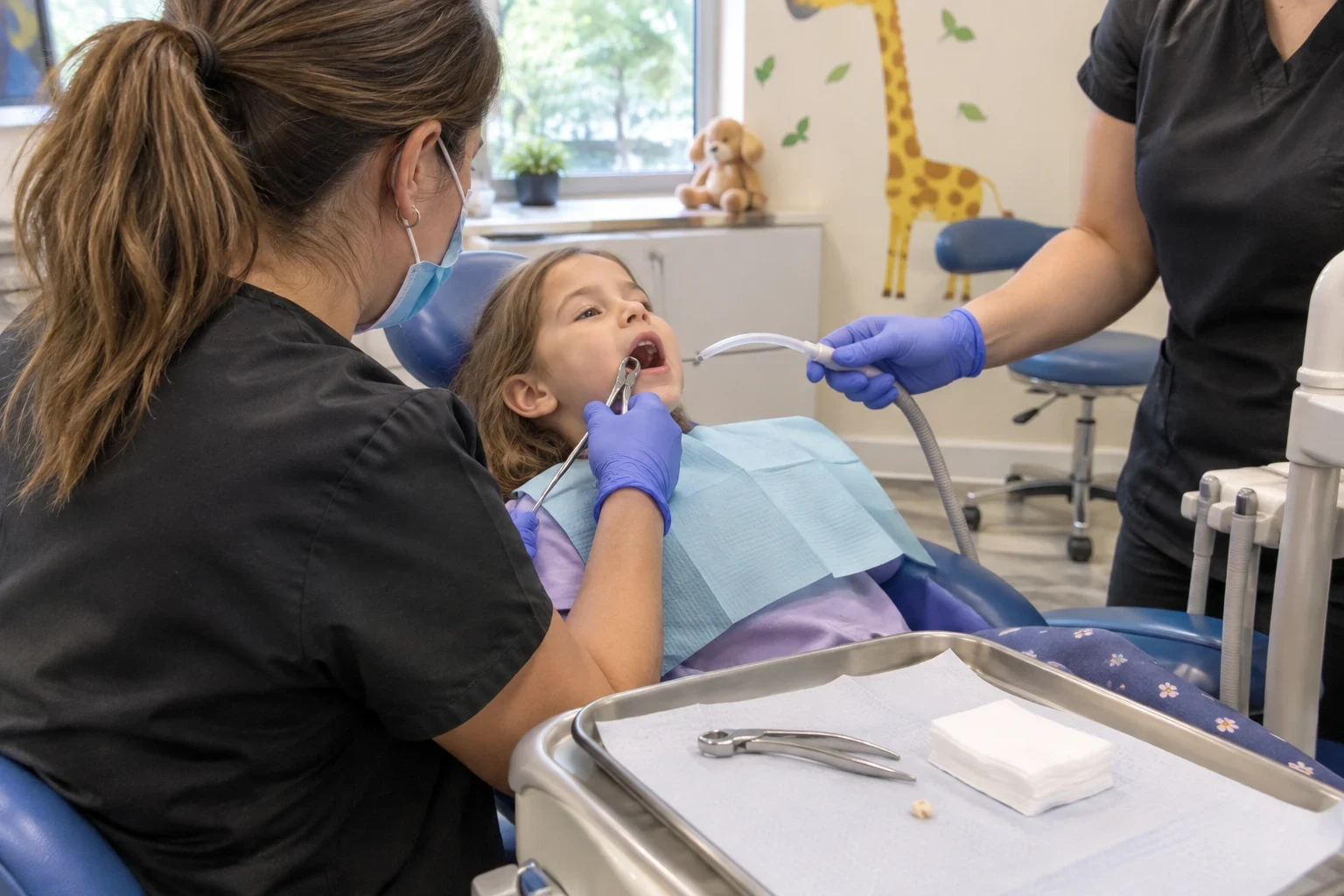
Extractions
When a baby tooth won't let go or a tooth can't be saved, we remove it gently, explain healing step by step and check back with you.
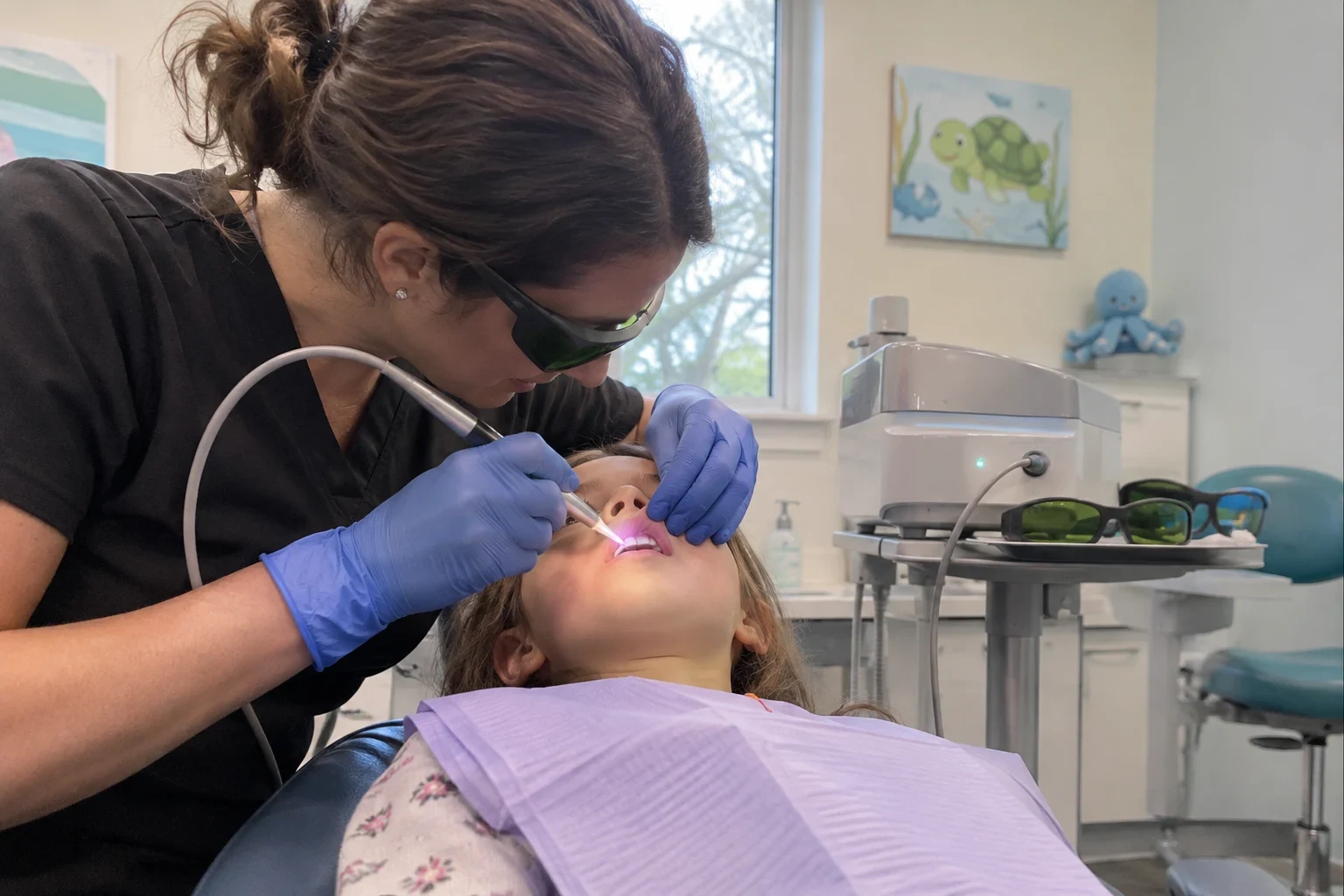
Frenectomies
Release of a tight tongue-tie or lip-tie, followed by a check-back visit and written stretching steps so the tissue heals with full movement.
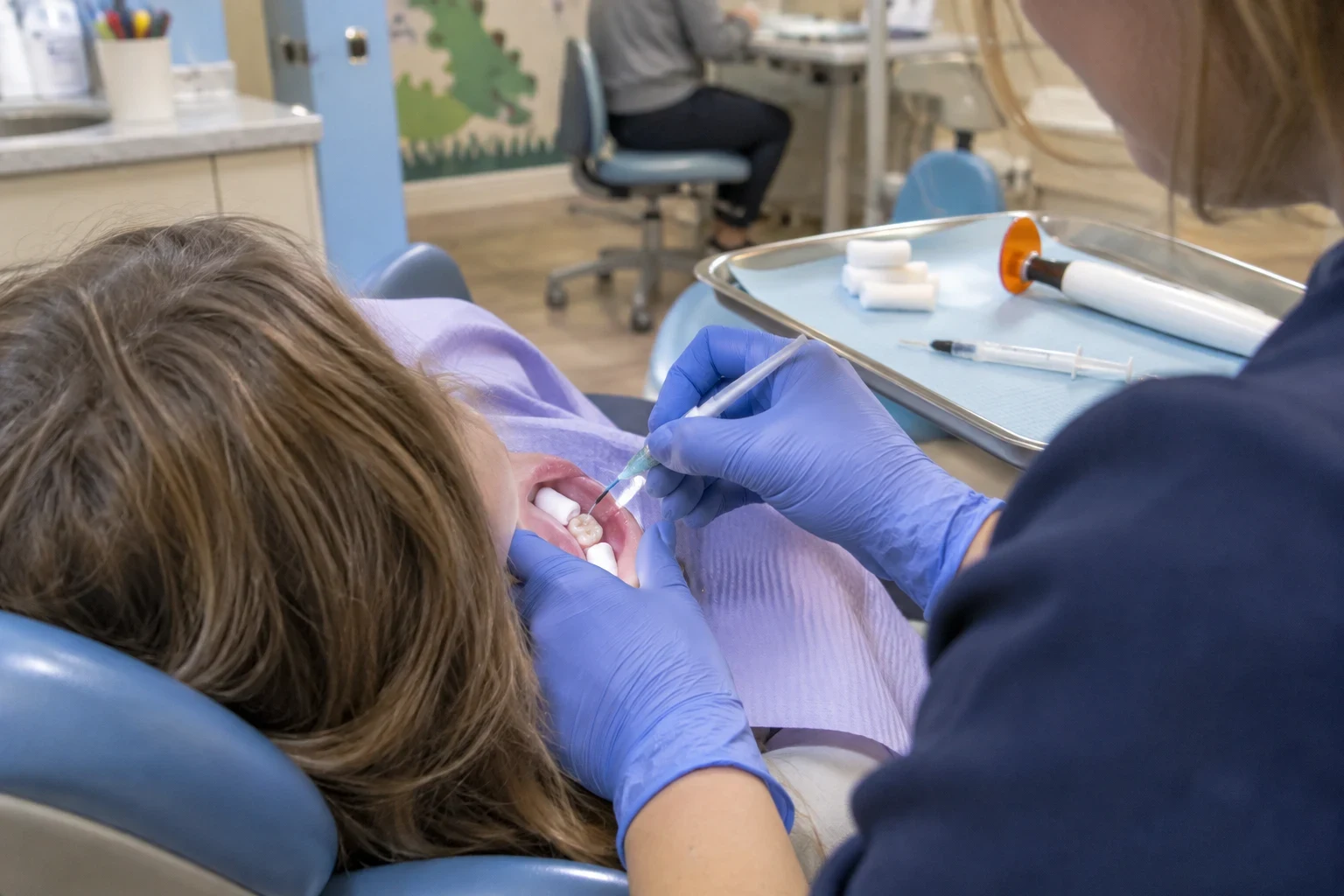
Sealants
A thin resin coating set into the grooves of back molars to keep food and bacteria out, placed without drilling and rechecked at every six-month visit.
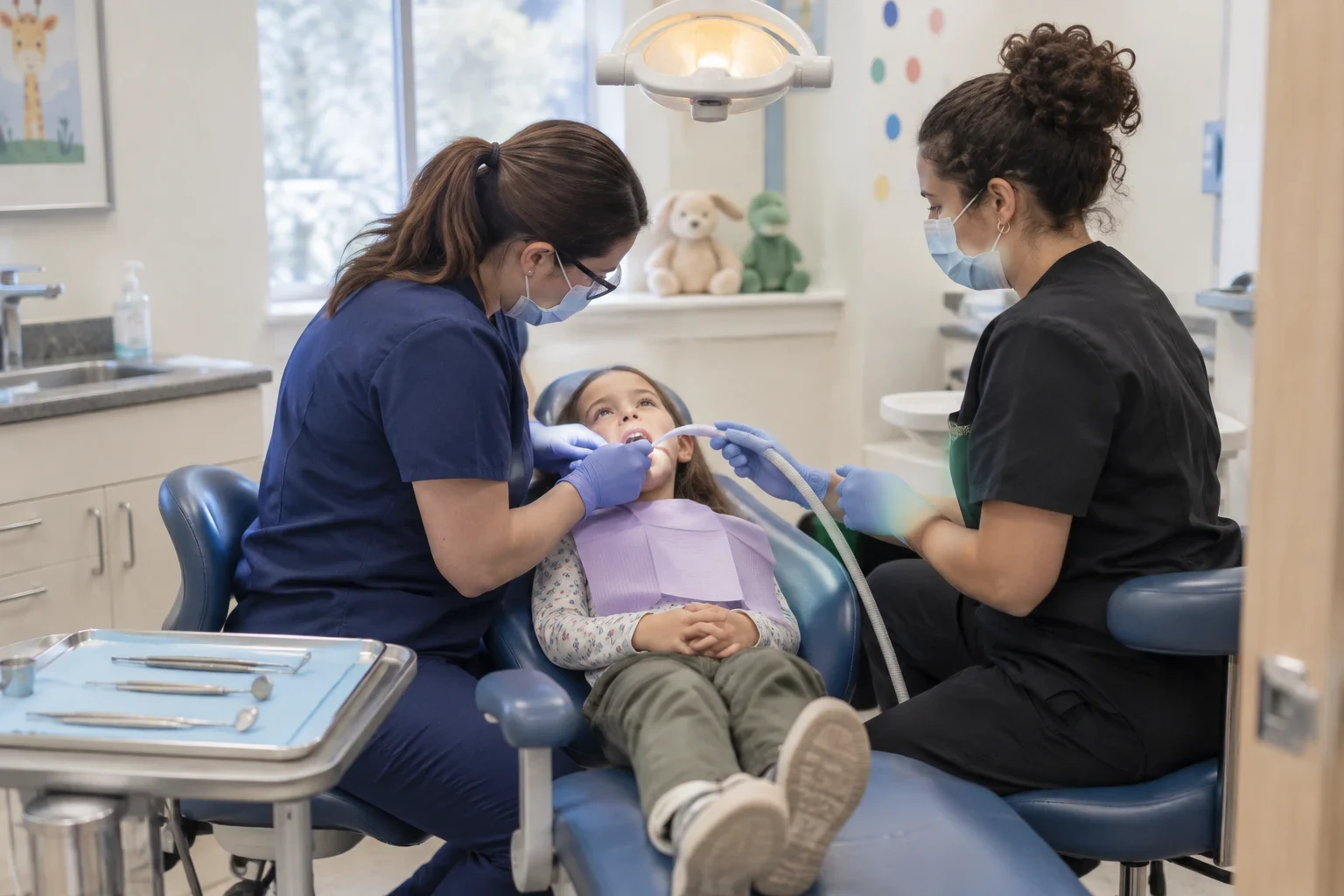
Space Maintainers
A small fixed or removable appliance that keeps neighboring teeth from drifting into the gap left by an early lost baby molar.
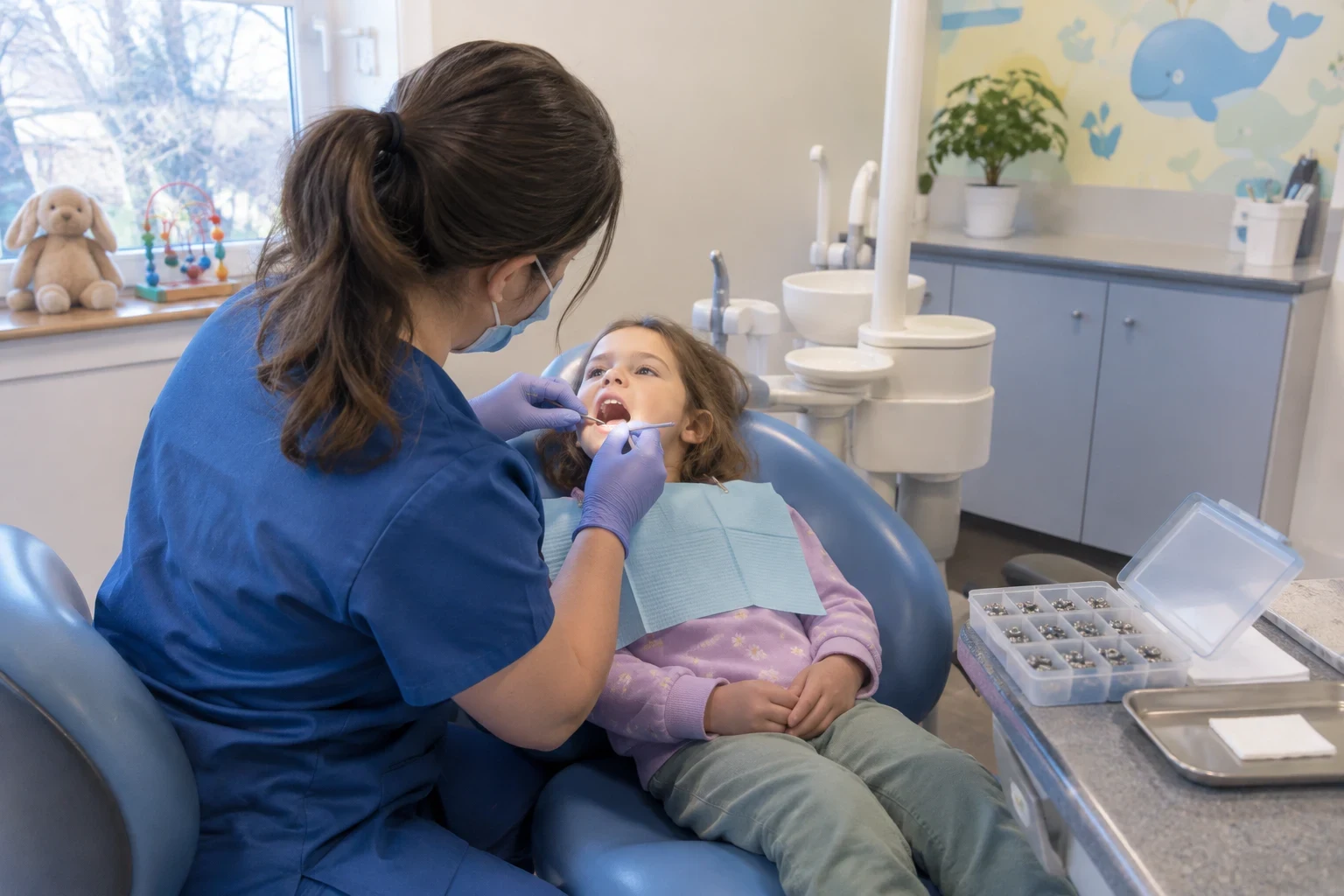
Pediatric Crowns
Full-coverage crowns that protect a badly decayed or weakened tooth until it falls out naturally, with a check-in once it's placed and simple care steps.
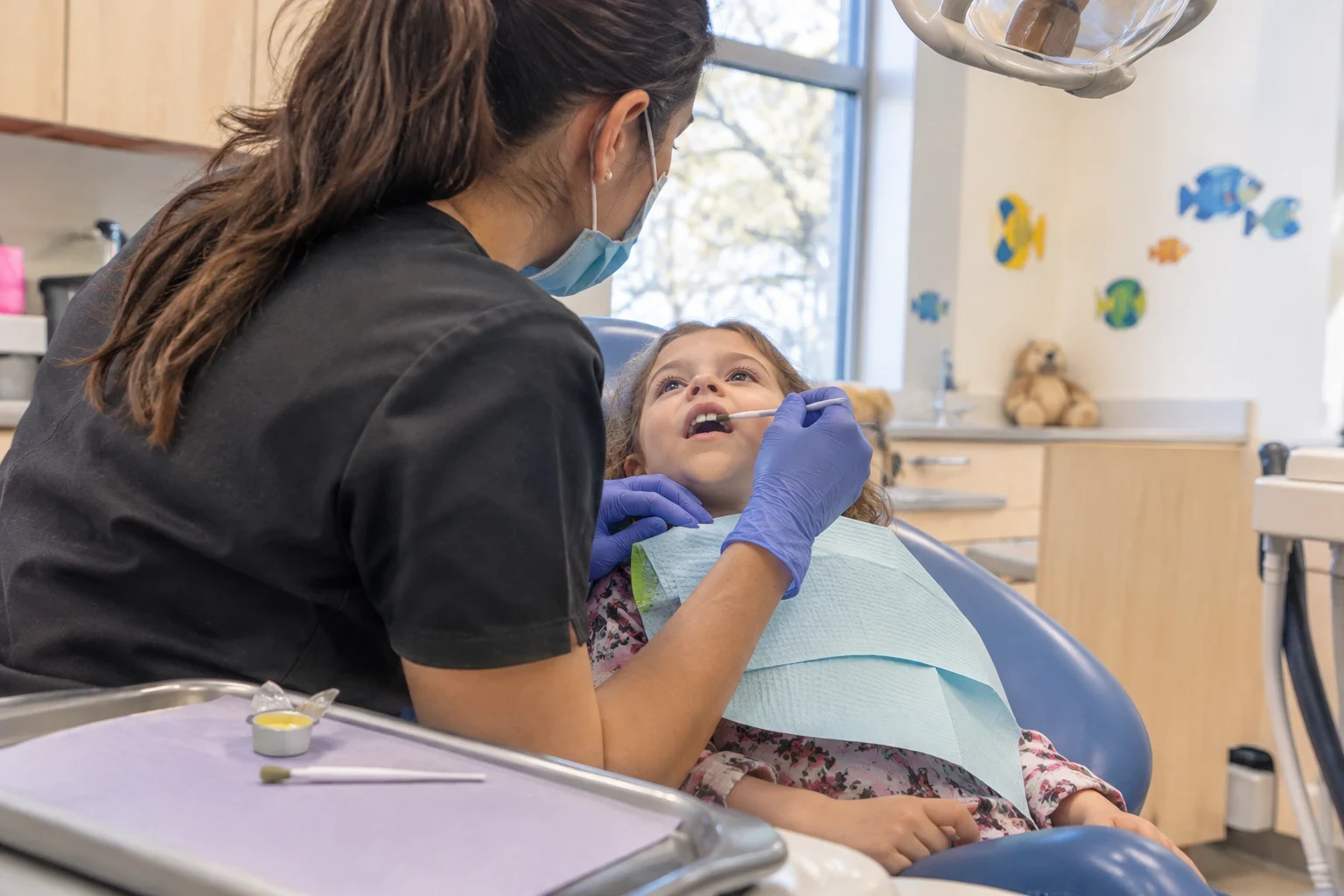
Fluoride Treatment
A quick, painless varnish that helps enamel resist acid and harden early white spots, with clear care instructions for the rest of the day.
What Shapes the Cost of Your Child's Care
No two treatment plans cost the same, because no two mouths are the same. Here is what actually moves the number. We go over each item with you before any work starts.
Once we have examined your child and taken any needed x-rays, we go over the recommended treatment and expected costs before anything is scheduled. For payment, you can use Visa, MasterCard or Discover, most insurance plans, or the CareCredit Patient Payment Plan.
- How many teeth are involved
- One small cavity is a different job from decay on several molars. Treating more teeth in one visit can sometimes cut down on repeat appointments.
- Depth of the problem
- Decay caught in the enamel can often be fixed with a simple tooth-colored filling. Once it reaches the pulp, the tooth may need a pulp treatment and a crown to stay in place until it falls out naturally.
- Materials
- Stainless steel crowns are durable and work well on back baby teeth. Tooth-colored crowns look more natural on front teeth, and the material affects cost.
- Sedation
- Nitrous oxide adds less to a visit than deeper forms of sedation. The type we recommend depends on your child's age, health and how much treatment is needed.
- Your insurance plan
- Most insurance plans work with our office, but coverage for sealants, crowns and sedation varies from plan to plan. We help you read what your plan lists so you are not guessing.
A Practice Built Around Kids
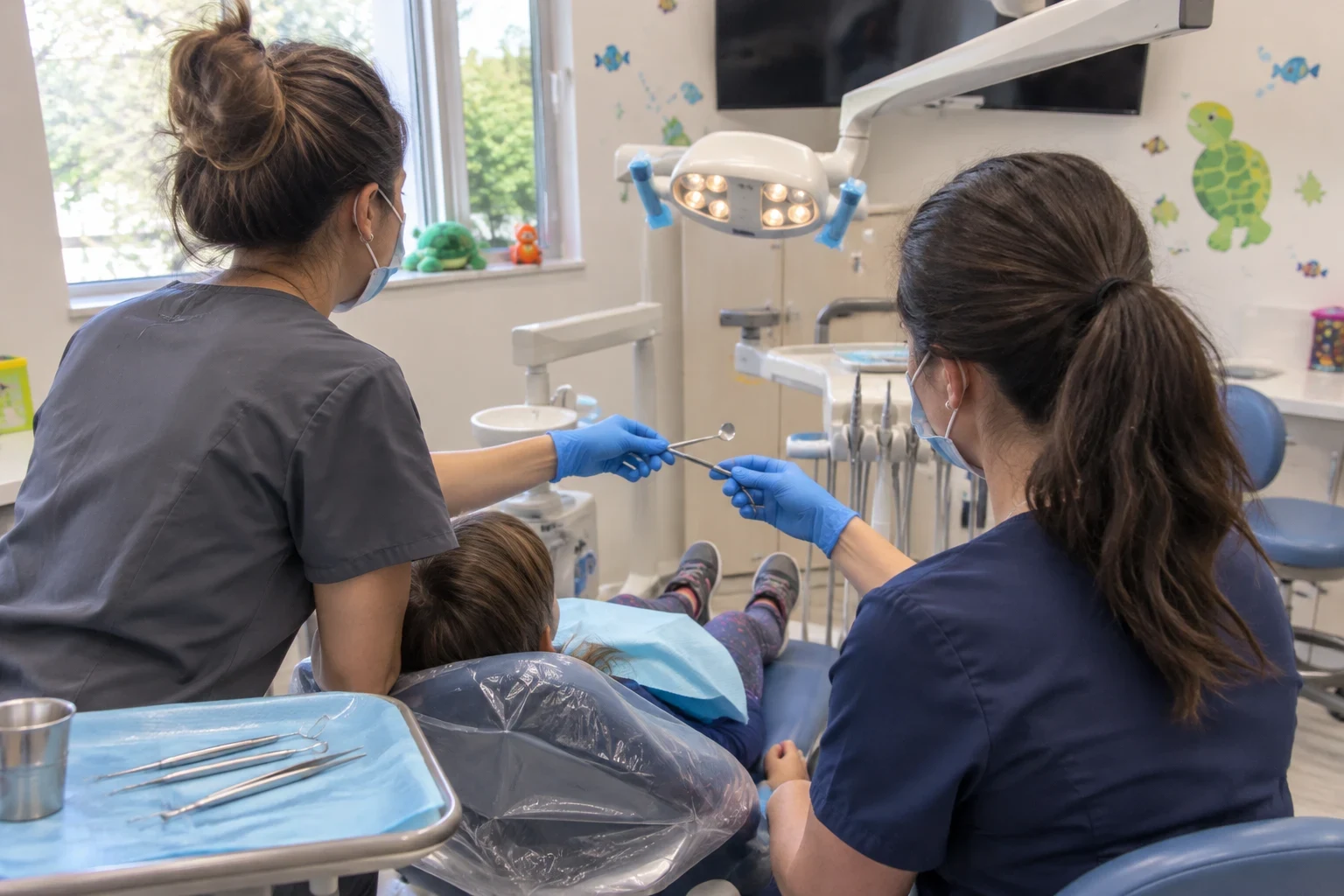
We are a pediatric dental office in West Concord, and children are the only patients we see. Our chairs, tools and explanations are sized for small mouths and short attention spans. Parents are welcome to stay close during visits, especially the first few.
We think a filling or crown is only as good as the care it gets at the sink each night. A sealant that chips on a sticky candy, or a crown margin that collects plaque because brushing skipped that spot, can cause trouble down the line. That is why we spend time on care instructions and why we check back once treatment is done instead of waiting until the next cleaning.
- In business
- 11+ years in practice
- Certifications
- Board-certified pediatric dentists
How We Work With Your Family
Treatment is only half the job. The other half is making sure the work holds up once your child leaves our chair, so we build follow-up into every visit.
- 01
Care instructions you can follow
Before you leave, we walk you through what to expect: when numbness wears off, which foods to skip for a day, how to brush around a new crown or sealant. You get it in plain words, not a stack of pamphlets.
- 02
We check back
Once fillings, extractions, sedation or other treatment are done, we follow up to ask how your child is eating, sleeping and feeling. If something seems off, we talk it through and decide together whether your child should come back in.
- 03
Explanations before treatment
We show you the x-rays and point to what we see, whether it is a shadow between two molars or a deep groove that traps food. You will know why we recommend something before you agree to it.
- 04
A pace set by your child
We tell kids what each tool does before it touches a tooth. A nervous five-year-old gets more time and more explanation, not more pressure.
- 05
Honest about baby teeth
Some cavities in a tooth that will fall out soon can be watched instead of filled. We tell you when that is a reasonable choice and when it is not.
Questions Parents Ask Us
When should my child have a first dental visit?
Pediatric guidance points to around age one, or roughly half a year after that first tooth breaks through the gum, whichever comes sooner. These early visits are short and focus on checking development and showing you how to clean very small teeth. They also give us a chance to catch chalky white-spot decay before it turns into a cavity.
Do baby teeth really need fillings if they will fall out?
Often yes. Baby molars hold space for adult teeth until roughly ages 10 to 12, and untreated decay can spread to the nerve and cause pain or infection. That said, if a tooth is close to falling out and the cavity is small, watching it can be reasonable, and we will tell you when that is the case.
Is sedation safe for kids?
We choose sedation based on your child's age, health history and the amount of treatment needed. Many kids do well with nitrous oxide, which wears off quickly once the mask comes off. We review the instructions with you beforehand, monitor your child throughout and check back with you later.
How often does my child need a cleaning?
Twice a year is the typical rhythm for most kids. If your child has had cavities before, wears braces or has a medical condition that affects the mouth, a shorter interval can catch problems earlier. We set the schedule from what we see at each visit.
What happens once my child's treatment is done?
Before you leave, we go over what to expect, such as how long numbness lasts and which foods to avoid for the rest of the day. Then we follow up to see how your child is doing. If anything seems wrong, we talk it through and set up a visit if needed.
What forms of payment do you accept?
Most insurance plans are accepted here, along with Visa, MasterCard and Discover cards. Families who want to spread out a larger cost can use the CareCredit Patient Payment Plan. Keep your insurance card nearby when you call to register so we can go over your plan.
Do you see teenagers?
Yes. We care for kids from infancy through the teen years. Teens still benefit from sealants on newer molars and from regular cleanings, especially during sports seasons and busy school years.
Families We See Around West Concord
Our office is in West Concord, and many of our patients come from Concord, Acton, Sudbury and Maynard. We also see kids from Stow, Lincoln, Waltham, Lexington, Westford and Hudson.
- West Concord
- Acton
- Sudbury
- Concord
- Maynard
- Stow
- Lincoln
- Waltham
- Lexington
- Westford
- Hudson
If the drive is a concern for routine visits, we are glad to talk through scheduling by phone. Our Service Areas page lists the towns our patients come from most often.
Ready to Get Your Child Started?
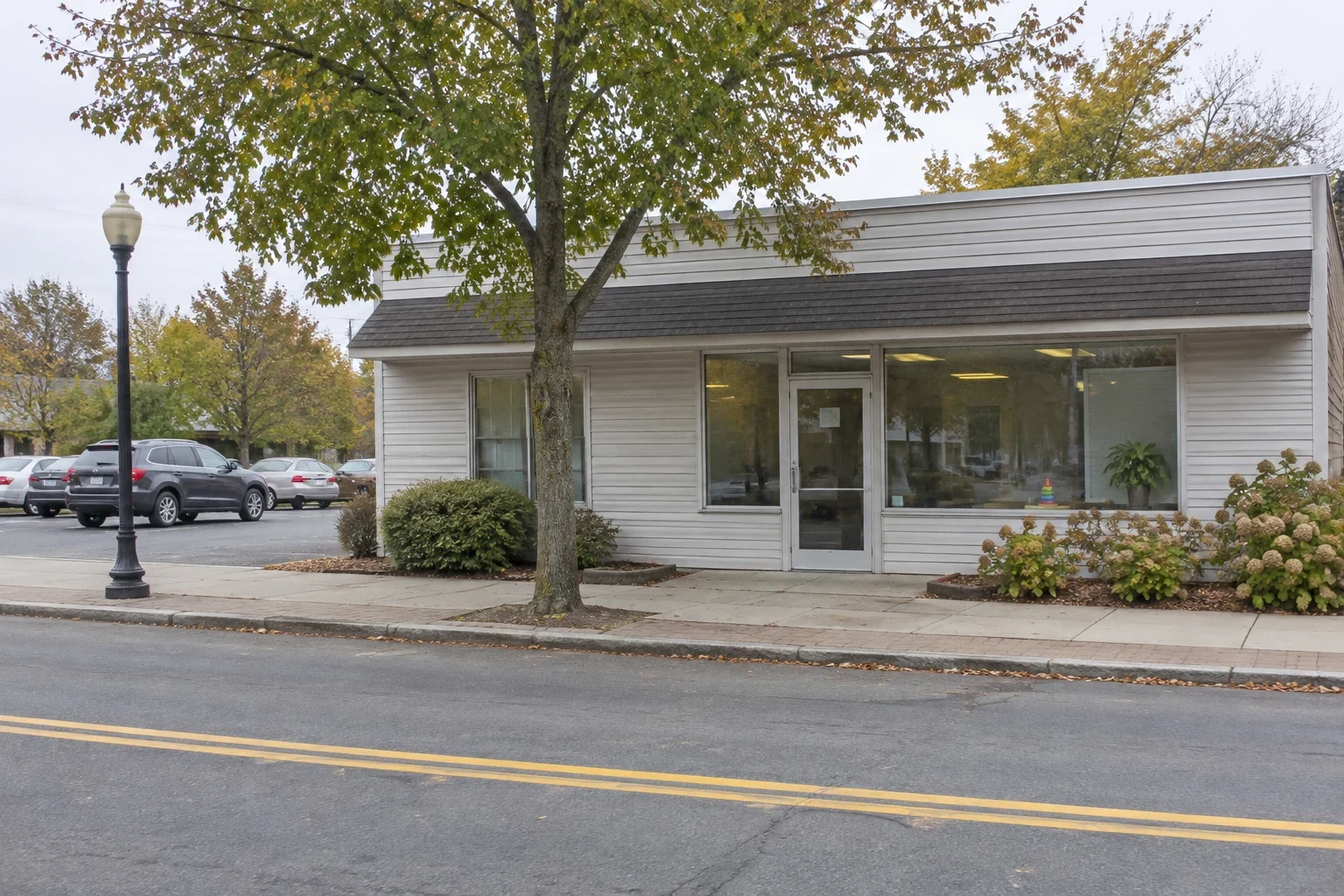
Registering takes one phone call. We set up your child's record, answer your questions and find a first visit time that works for your family.