ServicesFluoride Treatment
Fluoride Treatment in West Concord
We paint a thin coat of fluoride varnish onto your child's teeth during a regular visit. It sets on contact with saliva, strengthens enamel where early decay starts and takes about a minute. Before you leave, we explain what your child can eat and when to brush.
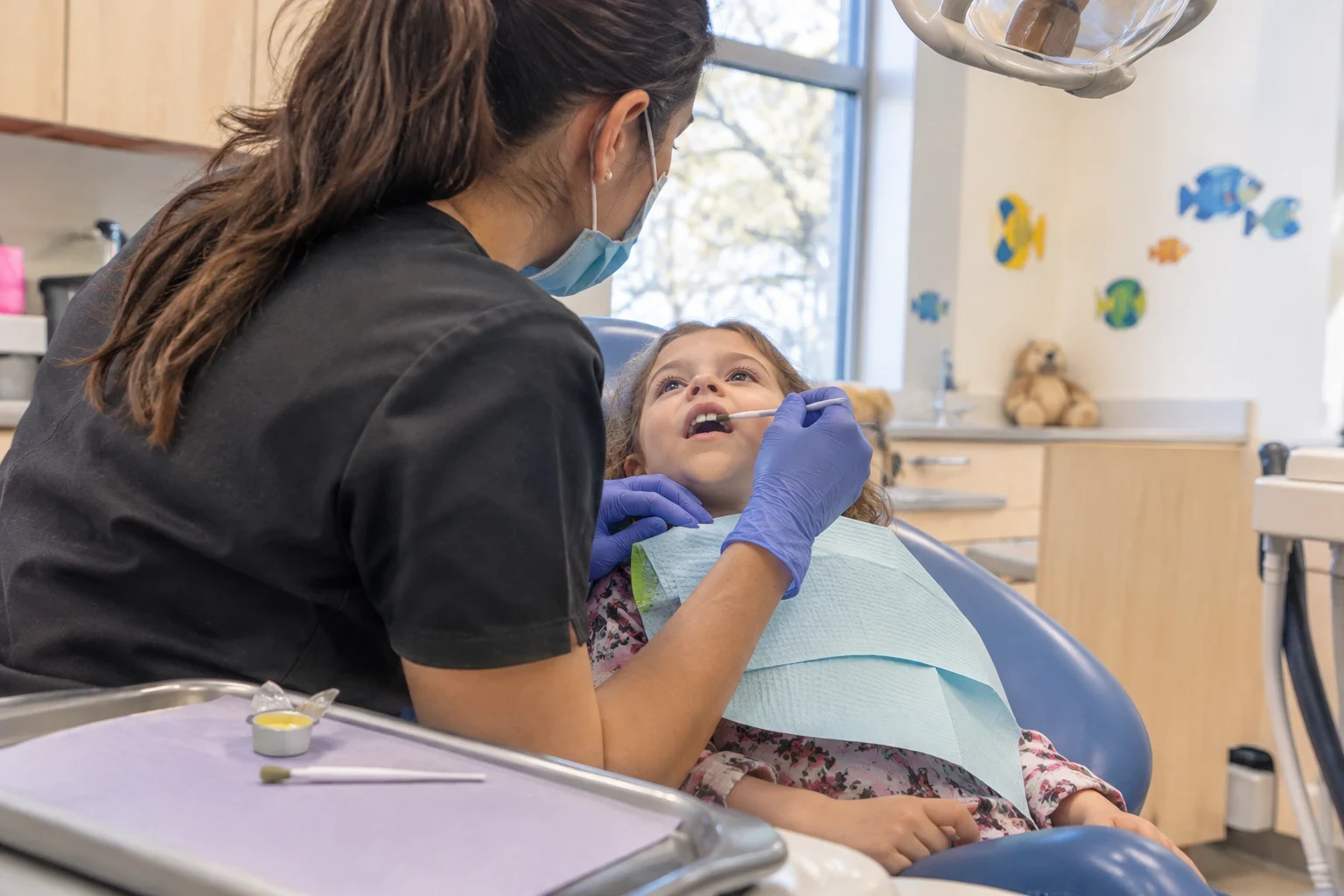
What fluoride varnish does for your child's enamel
Enamel is mostly hydroxyapatite, a mineral that loses calcium and phosphate every time plaque bacteria turn sugar into acid. Saliva puts some of that mineral back. When the losses outrun the repairs, a chalky white spot forms, and that spot is the first stage of a cavity.
Fluoride tips the balance. It speeds remineralization and helps form fluorapatite, which holds up to acid better than the original mineral. Varnish keeps a concentrated dose against the teeth for hours instead of rinsing away like toothpaste, so baby teeth with thin enamel and newly erupted adult molars get the most from it.
Our board-certified pediatric dentists set how often your child needs it based on decay risk, not a fixed calendar. With 11+ years in practice, we have learned that the conversation at the end of the visit matters as much as the brush strokes, so every application ends with clear instructions and a recheck of the enamel at the next visit.
What each fluoride treatment includes
- A risk check first
- We look at existing fillings, white spot lesions, plaque buildup, snacking habits and the water your family drinks. That tells us whether varnish at each six-month checkup is enough or whether a closer interval makes sense.
- Drying the teeth
- We wipe each section with gauze so the varnish grips clean enamel instead of sitting on a layer of saliva or plaque.
- Varnish applied tooth by tooth
- A small brush spreads the sticky varnish over every surface, with extra attention to molar grooves and the gumline, where white spots tend to show up first. It firms up as soon as saliva touches it.
- Instructions for the rest of the day
- You leave knowing what to do: soft foods, nothing hot or sticky, and no brushing or flossing until the next morning. We also explain the yellowish film so it does not catch you off guard.
- A follow-up look
- At the next visit we compare any white spots we noted, so you can see whether they are hardening back up or need something more, like sealants or a small filling.
Signs your child could use fluoride varnish
Chalky white lines near the gums
Matte white bands along the gumline on front teeth are early demineralization. Caught at this stage, the enamel can often harden again with fluoride and better brushing.
New permanent molars coming in
Six-year and twelve-year molars erupt with immature enamel and deep grooves. They are most vulnerable in their first couple of years, which is also when they are hardest for kids to reach with a toothbrush.
A recent cavity or filling
One cavity is the strongest predictor of the next. Fluoride helps protect the enamel around a filled tooth and on its neighbors.
Frequent snacking or sipping
Juice, a bedtime bottle of milk, crackers and gummy snacks keep acid on the teeth for long stretches. Each exposure restarts the mineral loss.
Braces or a space maintainer
Brackets, bands and wires trap plaque against the enamel. Varnish helps protect surfaces that are hard to clean around the hardware.
Well water or mostly bottled water
If your family's drinking water has little fluoride, your child's teeth get less daily exposure, so a professional application does more of the work. Let us know what your child drinks.
How a fluoride visit works
- 1
Cleaning and exam
Varnish usually goes on at the end of a routine visit, once the hygienist has removed plaque and the dentist has checked each tooth. Our Exams & Cleanings page explains that part of the appointment.
- 2
Application
We dry a few teeth at a time and paint the varnish on. Babies and toddlers can sit in a parent's lap facing the dentist, which keeps them calm and steady. There is no drill, needle or rinse, and the whole step takes a minute or two.
- 3
Care instructions at checkout
We spell out what today and tomorrow should look like. Soft foods and cool drinks are fine straight away, while hard, crunchy, sticky or hot foods wait until the next day. A normal brushing the following morning clears the leftover film.
- 4
Checking back at the next visit
We look at the same spots again and tell you what changed. If risk has dropped, we may space treatments out. If a spot is still active, we talk through sealants or other options.
How fluoride varnish is priced
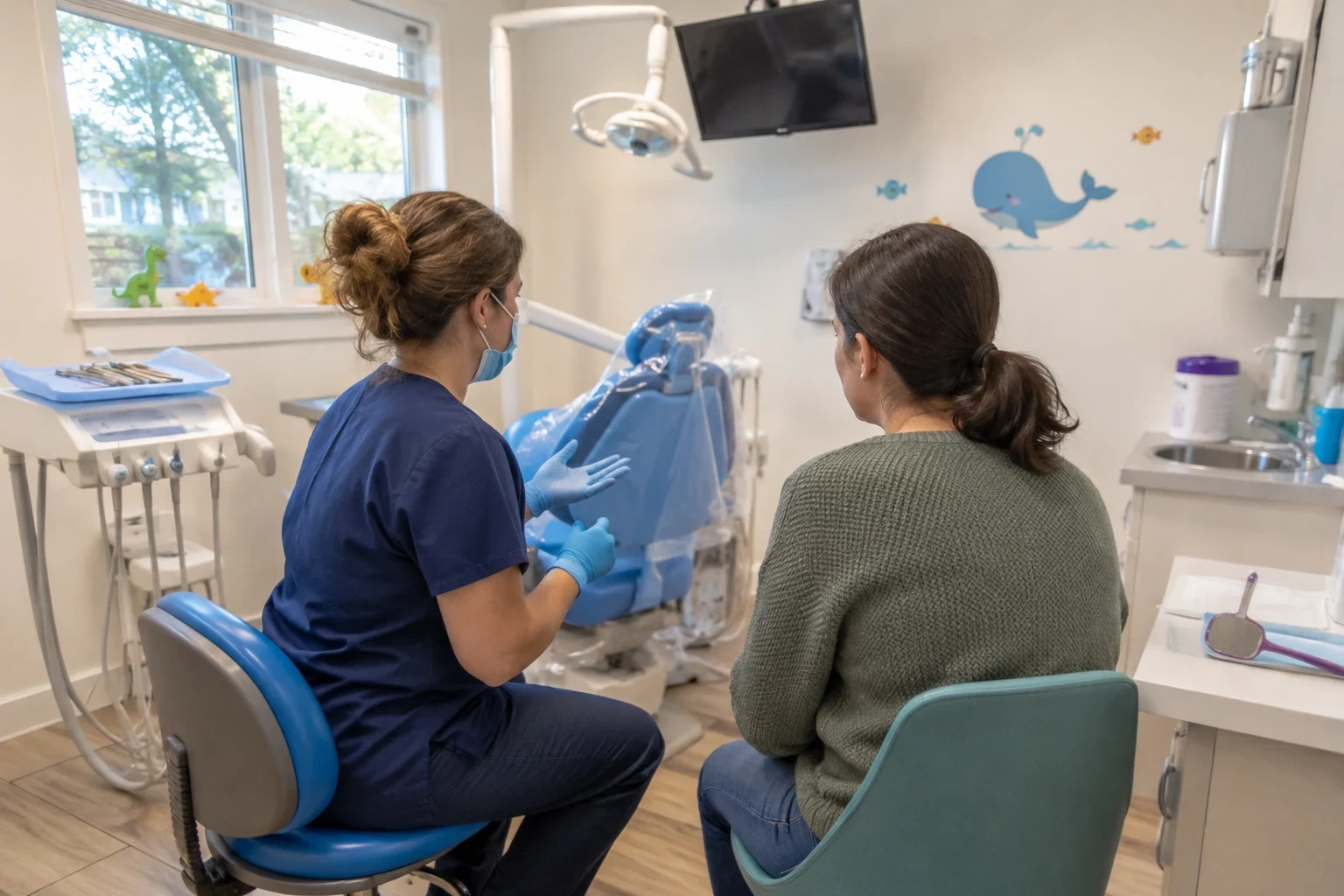
The varnish itself is a small line on your child's bill, and many dental plans cover it for kids at set intervals. Your share comes down to how your plan handles it and how often your child's enamel needs it. We accept MasterCard, Visa, Discover, most insurance plans and CareCredit Patient Payment Plan.
- How often your plan pays
- A lot of plans cover one or two applications a year. When your child's risk calls for more than that, the added visits may fall outside coverage, and we tell you before the varnish goes on.
- Where coverage stops by age
- Some plans drop fluoride once a child reaches a certain age. If you have a teen, check how your policy handles it.
- The rest of the appointment
- Varnish is usually billed with the cleaning and exam it follows, so your total covers the whole visit, not the fluoride on its own.
- Your child's cavity risk
- Kids with active white spots or a recent cavity may do better with an application every three months rather than every six, which changes how many visits a year include it.
Fluoride varnish: what parents ask us
Something not covered here? (978) 607-3830
At what age can my child start fluoride varnish?
Pediatric dental guidelines support starting with the first tooth. Each application uses a very small amount held in a sticky film, so very little is swallowed. We apply it to infants routinely, often with the baby sitting in a parent's lap.
Why do my child's teeth look yellow once the varnish is on?
The varnish leaves a thin tinted film while it releases fluoride into the enamel. It is normal and temporary. Brushing the next morning removes it.
How often should my child get fluoride?
Most kids get it every six months at their checkup. Children with active white spots, recent cavities or braces may do better every three months. We set the interval from what we see and adjust it at each follow-up.
Can my child eat right away?
Yes. Stick to soft foods and cool or lukewarm drinks for the rest of the day. Skip hard, crunchy, sticky and hot foods, and hold off on brushing and flossing until the next morning so the varnish stays in contact with the enamel.
Is fluoride the same thing as sealants?
No. Sealants are a thin resin coating that fills the grooves of back teeth to block food and bacteria physically. Fluoride strengthens the enamel itself on every surface. Many kids get both, and our Sealants page covers how they work.
Does my child still need fluoride toothpaste?
Yes. Varnish works between visits, but daily toothpaste does the steady work. Use a smear the size of a grain of rice for children under three and a pea-sized amount from three to six.
Set up your child's first visit
Register your child as a new patient by phone, and we will book the cleaning, exam and fluoride varnish together. Families come to us from West Concord, Acton, Maynard and Sudbury.