ServicesExams & Cleanings
Exams & Cleanings for Kids in West Concord
A checkup every six months removes the plaque and tartar a toothbrush misses and catches soft enamel before it becomes a cavity. Before you leave, we show you which teeth need more attention and how to reach them.
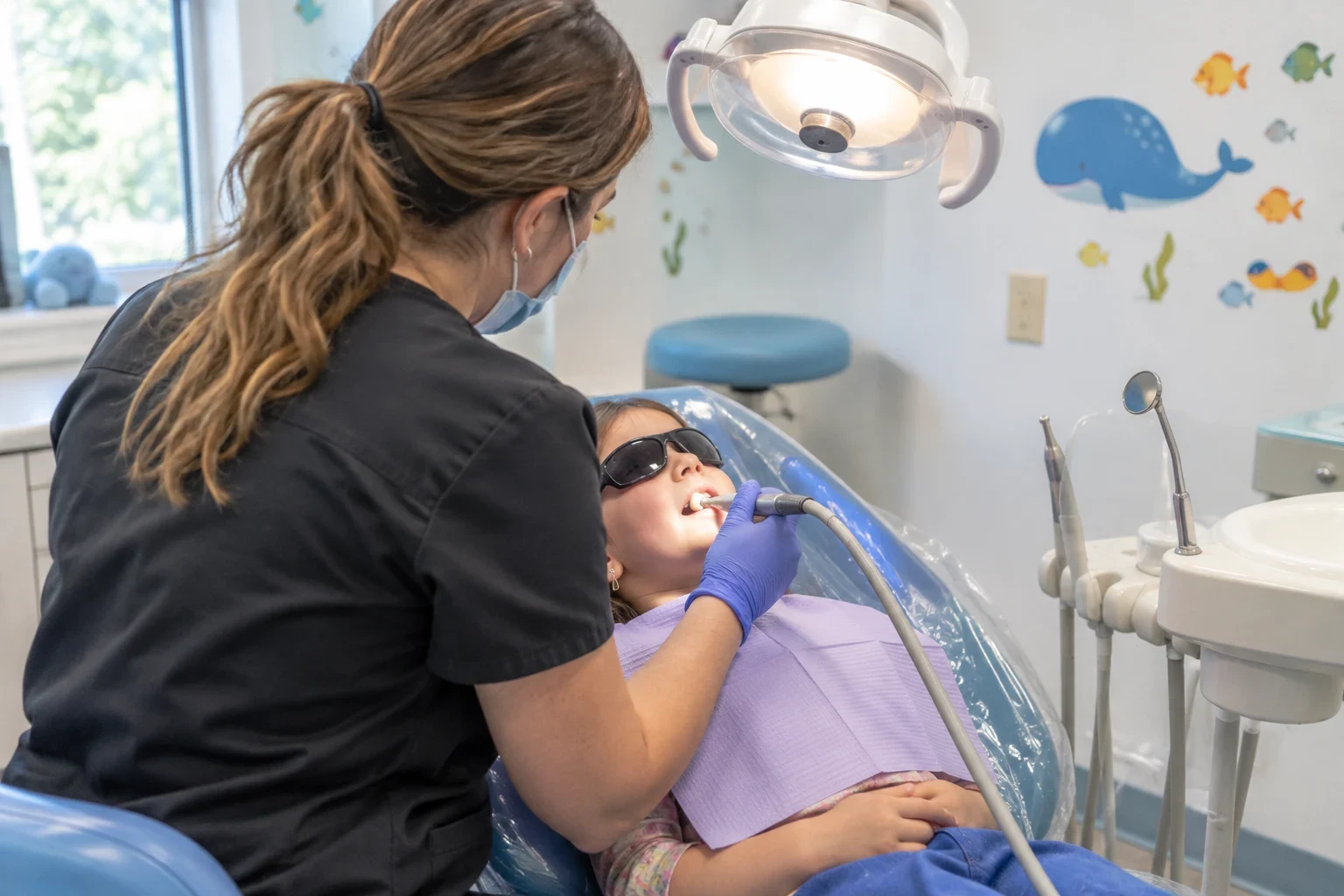
What a children's checkup actually does
Plaque is a film of bacteria that sticks to enamel and feeds on sugar. Left alone, it hardens into tartar, also called calculus, which a toothbrush cannot remove. The acid those bacteria make pulls minerals out of enamel. That first shows up as a chalky white spot, long before there is a hole. Baby teeth have thinner enamel than adult teeth, so this happens faster in kids.
An exam and cleaning interrupts that process. We scale off tartar, polish away stain and plaque, and check every surface, including the tight contacts between back molars where most early decay in children starts. Our board-certified pediatric dentists also track how the jaw is growing and which teeth are coming in, so a crowding or bite problem gets noticed early.
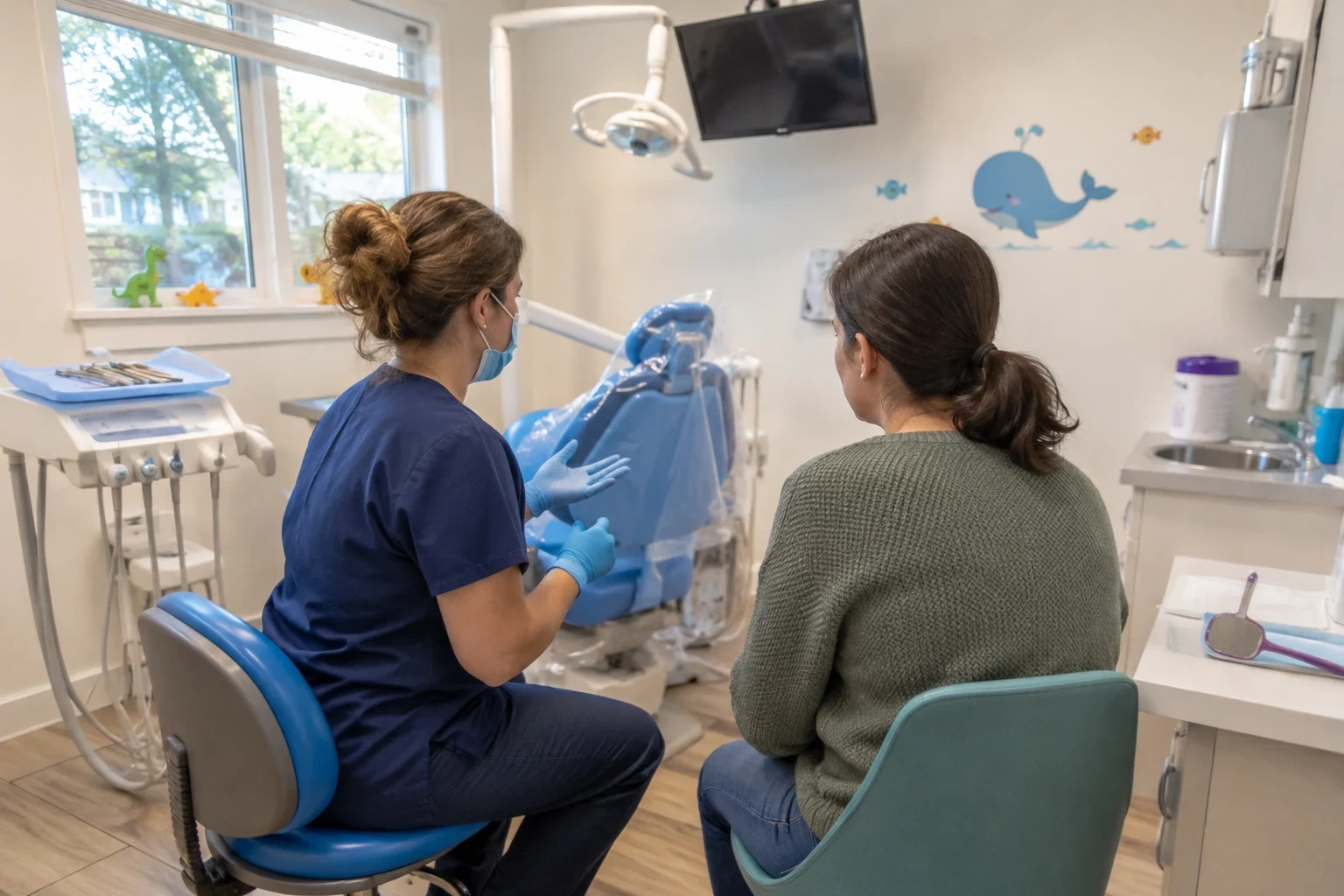
The part parents tell us helps most comes after the cleaning. We explain what we found, tooth by tooth, and show you and your child where the brush keeps missing.
What's included in the visit
- Cleaning and polish
- A hygienist removes tartar with a hand scaler, then polishes with a gritty paste on a soft rubber cup. We floss every contact, since that is where plaque collects in kids who do not floss yet.
- Full exam of teeth and gums
- The dentist checks each tooth for white spots, stain in the grooves and soft enamel. Beyond the teeth, we examine the gum line, the soft lining of the mouth and the small folds of tissue, called frenums, that tie the lip and tongue down.
- X-rays when they are needed
- Bitewing X-rays show decay between back teeth that no mirror can see. How often your child needs them depends on their cavity risk, not on a fixed schedule, and we tell you the reason each time.
- Growth and bite check
- We note which baby teeth are loose, which adult teeth are erupting, and how the upper and lower teeth meet. Habits like thumb sucking or a pacifier past the toddler years get discussed here.
- Fluoride and prevention advice
- Most visits end with fluoride varnish painted on the teeth. If deep grooves on new molars look likely to trap food, we may suggest sealants and explain why.
- Care notes for you
- You leave knowing which teeth to watch, what to change in brushing or snacks, and when the next visit should be.
Signs your child is due for a checkup
It has been more than six months
Tartar builds steadily, and early decay gives no pain. A regular schedule is the only reliable way to catch it while it can still be reversed.
Chalky white or brown spots
White patches near the gumline are demineralized enamel. Brown or gray spots in the grooves can mean decay has gone deeper.
Bleeding when brushing
Pink on the toothbrush usually means plaque is sitting along the gumline and inflaming the gums. A cleaning and better technique usually clear it up.
Your baby's first tooth is in
A first visit by the first birthday, or when the first tooth appears, lets us check enamel early and show you how to clean tiny teeth.
Sensitivity to cold or sweets
A wince at ice cream can point to thin enamel or an early cavity. It is worth a look before it turns into a toothache.
What changes the price of a checkup visit
Most cleaning visits come out close to the same total from one six-month appointment to the next, but a few pieces can shift it. We tell you which of them apply to your child, and the reason for each, before we add anything to the bill. We accept MasterCard, Visa, Discover, most insurance plans and CareCredit Patient Payment Plan.
Which X-rays are taken
Your child's age and cavity risk decide whether we take bitewings, a wider image or none at all. Images are charged on their own, apart from the exam.
Fluoride varnish
Varnish shows up as a separate line on the bill. Some insurance plans stop paying for it once a child reaches a certain age.
How much tartar has built up
Hardened calculus packed along the gumline needs more time with the scaler than a light polish does.
How your plan pays
Insurance plans set their own limits on how often they cover cleanings and images. Have your plan details handy when you call, and we will walk you through what typically applies.
How the appointment runs
- 1
Get settled
We start with a short talk about your child's health, diet and brushing routine. Nervous kids get to hold the mirror and see the tools before anything goes in their mouth.
- 2
Clean and examine
The hygienist cleans and flosses, then the dentist examines and takes any needed X-rays. Babies and young toddlers are checked knee to knee on a parent's lap so they can see you the whole time.
- 3
Walk through the findings
We show you what we saw and explain it plainly. If something like a filling is needed, you hear why, what the options are and what can wait.
- 4
Check back afterward
We set the next visit and follow up on anything we asked you to watch. If you have a question about a spot or a new routine after you get home, call and we will go over it.
Questions parents ask about exams and cleanings
When should my child have their first visit?
Aim for one when the first tooth breaks through, and no later than age one. The visit is short, and your baby mostly stays on your lap. We look over the new enamel for early white spots and show you how to wipe and brush those first few teeth.
Why does my child need X-rays if the teeth look fine?
Decay often starts on the sides of back teeth where they touch, and those surfaces are hidden from view. Bitewings let us see it while it is small. We only take them when your child's risk and age call for it, and we use the lowest exposure that gives a clear image.
My child is scared of the dentist. How do you handle that?
We go slowly and explain each tool before we use it, often letting your child touch it first. We have 11+ years in practice with kids of every temperament, and most anxious children relax once they know what comes next. For a child with severe fear or special needs, we can talk about sedation dentistry as a separate option.
Can I stay in the room?
Yes. Many parents stay, especially for younger kids. Being there also means you hear the care notes firsthand.
What happens if you find a cavity?
We show you where it is and how deep it looks, and explain whether it can be watched with fluoride or needs a filling. Treatment is usually scheduled as its own visit so the checkup stays easy for your child.
Set up your child's next checkup
New families start with a quick phone registration, and then we find a time that works around school. We'll go over what to bring and what the first visit looks like.