ServicesPediatric Crowns
Pediatric Crowns in West Concord
When decay or a fracture leaves too little tooth for a filling to hold, a crown covers the whole tooth and keeps it working. We fit stainless steel or zirconia crowns gently, then check back to make sure your child is chewing comfortably.
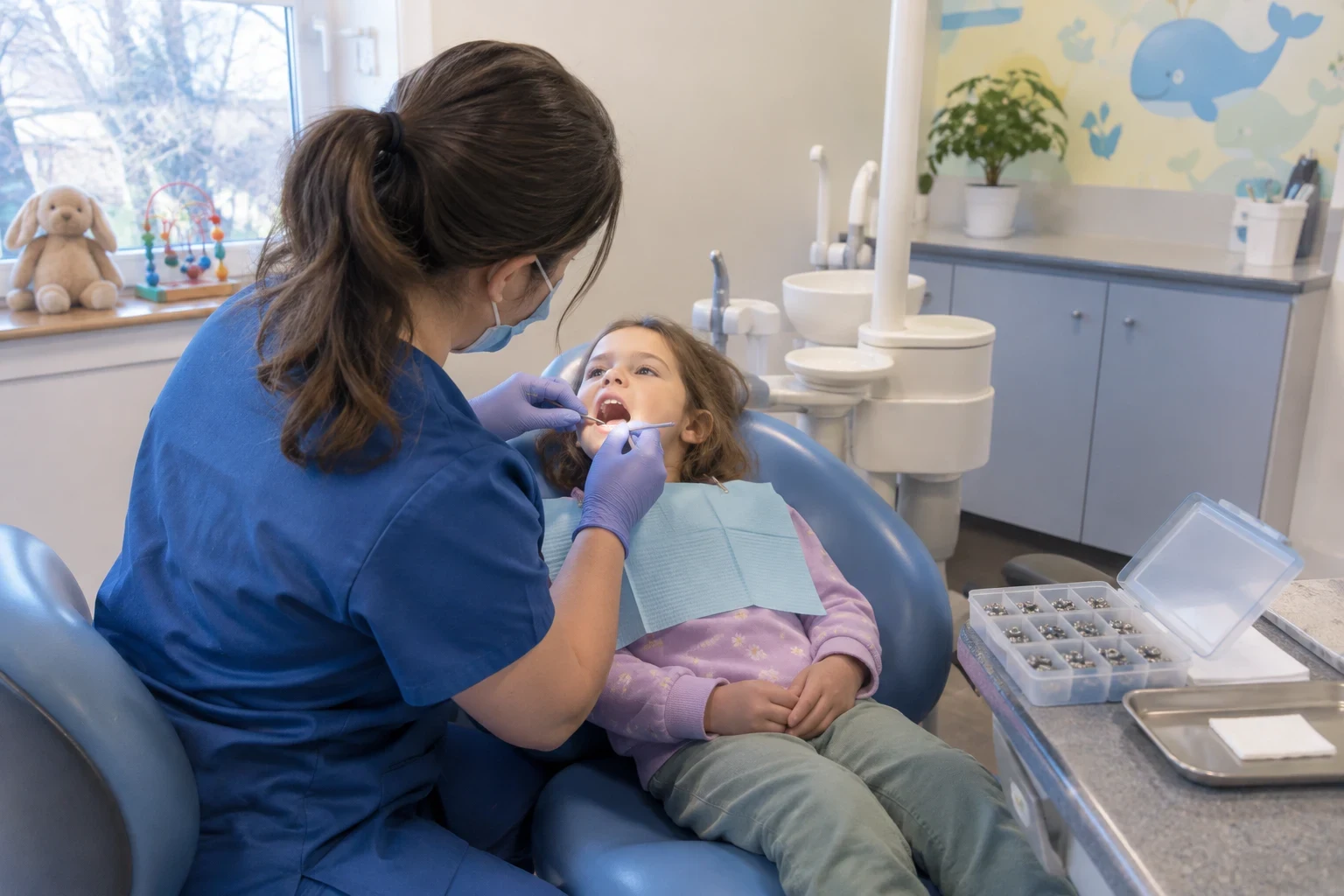
When a Crown Is the Right Call
A filling works when enough healthy enamel surrounds it. Once decay spreads across two or more surfaces of a baby molar, the remaining walls are thin and tend to crack under chewing force. A crown caps the entire tooth, so there are no fragile edges left to break, and the seal at the gumline keeps bacteria from getting back under it.
Baby molars hold space for permanent teeth until roughly age 10 to 12. Losing one early can let neighboring teeth drift, so a crown is often a better choice than pulling a tooth that still has years of work to do. Our dentists weigh how long the tooth has left before recommending one.
The work doesn't end when your child leaves the chair. We check in following the visit and walk you through how to care for the crown, because most crown problems we see come from sticky foods and missed brushing at the gumline, not from the crown itself.
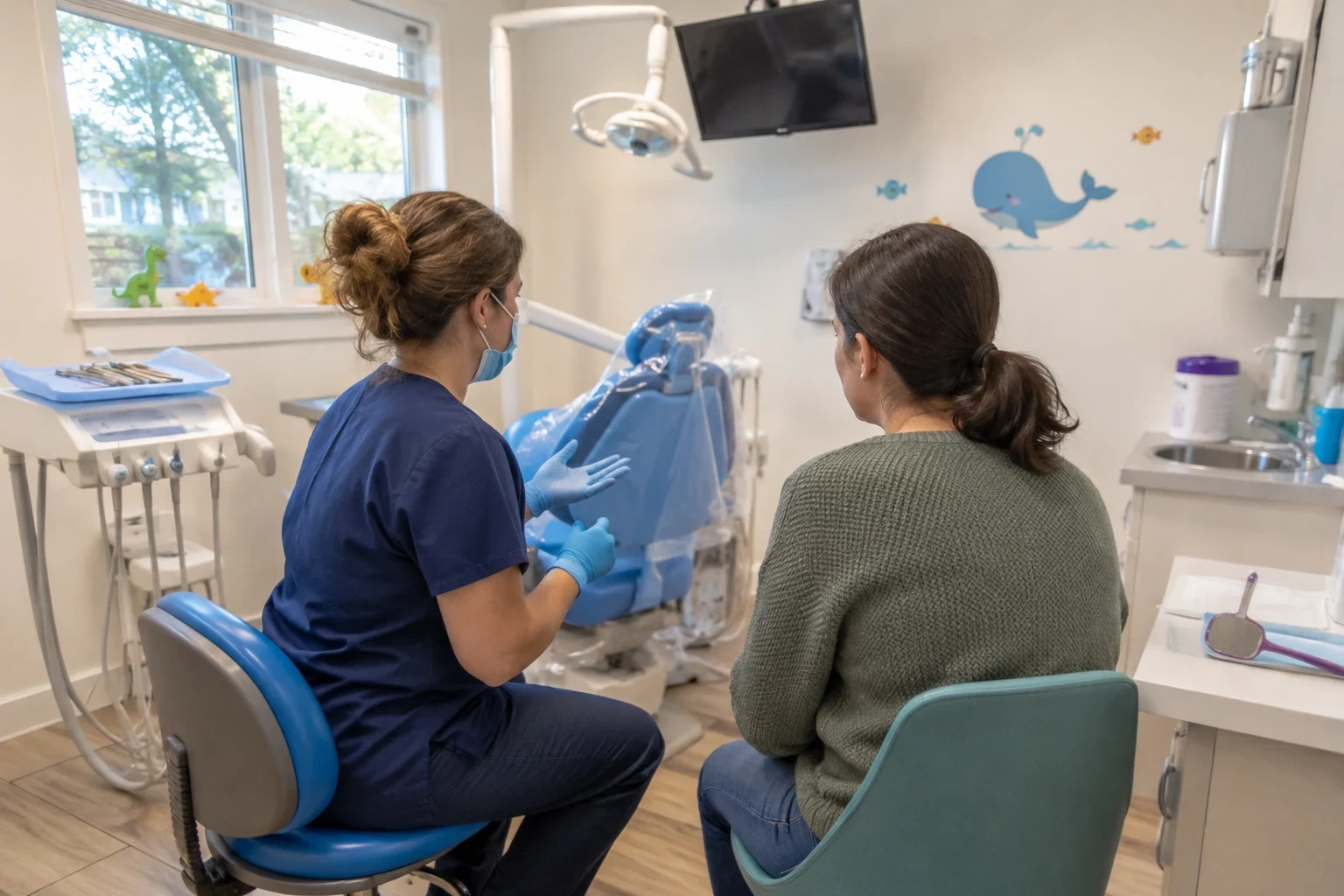
What Crown Treatment Includes
- 01
Stainless steel crowns
Preformed steel crowns are the standard for baby molars. They need little tooth reduction, tolerate a bit of moisture during placement, and rarely wear through before the tooth falls out.
- 02
Zirconia crowns
Tooth-colored zirconia is an option for front teeth and some molars when appearance matters. It is very hard and stain-resistant, but it needs more tooth shaping and a dry field to bond well, so it suits kids who can sit still for a longer visit.
- 03
Pulp treatment when needed
If decay has reached the nerve, we treat the pulp first and then crown the tooth. Our Root Canals page explains how that step works for baby and permanent teeth.
- 04
Fit and bite check
Before cementing, we confirm the crown's margin sits snugly below the gumline and that your child's bite meets evenly. A high spot can make the jaw sore, so we adjust it on the spot.
- 05
Care instructions and follow-up
You leave with plain instructions for the first day and the months that follow. We follow up by phone, then recheck the crown at every cleaning until the tooth is naturally lost.
Questions about Pediatric Crowns?
Call(978) 607-3830Signs Your Child May Need a Crown
Large or recurring cavities
Decay on several surfaces of one molar, or a filling that keeps failing, usually means the tooth needs full coverage.
A chipped or cracked tooth
A fall or a hard bite can split enamel. A crown holds the pieces together and protects the inner layers.
Weak or discolored enamel
Some kids are born with soft, chalky or pitted enamel (enamel hypoplasia). These teeth break down quickly and often do better crowned early.
Pain when chewing
Sensitivity to cold or sweets, or avoiding one side while eating, can point to decay close to the nerve.
How Crown Day Works
- 1
Numbing and comfort
We apply a topical gel before local anesthetic so the injection is barely felt. For anxious kids or multiple crowns, we can discuss options on our Sedation Dentistry page.
- 2
Removing decay and shaping
We clean out all soft, decayed tooth structure, then trim the tooth just enough for the crown to slip over it.
- 3
Sizing and cementing
We try preformed crowns until one fits precisely, then seat it with a fluoride-releasing glass ionomer cement that helps protect the edges. Most single crowns take one visit.
- 4
Check-in once you're home
We reach out following treatment to ask how your child is eating and sleeping, and answer any questions about gum soreness, which normally fades within a few days.
What Affects the Cost of a Crown
We explain the treatment plan and what each part involves before we start, so there are no surprises. For payment, most insurance plans are welcome here, and so are MasterCard, Visa and Discover cards. CareCredit Patient Payment Plan is another option families can use.
- Crown material
- Stainless steel crowns cost less than zirconia, which takes more chair time and a specialized preformed crown.
- Pulp treatment
- A tooth that needs nerve treatment first adds a separate procedure to the visit.
- Number of teeth
- Crowning several teeth in one visit changes the plan and may involve sedation, which is billed separately.
- Insurance coverage
- Plans differ on which crown materials they cover for baby teeth. We can check your benefits when you schedule.
Crown Questions Parents Ask
Why crown a baby tooth that will fall out anyway?
Back baby molars often stay until age 10 to 12. Leaving a decayed tooth can lead to pain and infection, and pulling it early can let other teeth shift into the gap. A crown keeps the tooth healthy and holding space until it comes out on its own.
How should we care for the crown at home?
Avoid eating until the numbness wears off so your child doesn't bite their cheek. Long term, brush where the crown meets the gum twice a day and floss beside it, since decay can start on the neighboring tooth. Skip sticky candy like taffy and caramels, which can pull a crown loose.
What happens when the crowned tooth falls out?
The crown comes out with the tooth when the permanent tooth pushes it loose, just like any baby tooth. No extra visit is needed unless it seems stuck.
What if the crown comes off?
Keep the crown and contact us to schedule a visit. Often we can clean and recement it. If the tooth itself is lost early, our Space Maintainers page covers how we hold the gap open.
How experienced is your team with crowns for kids?
Our dentists are board-certified pediatric dentists, and the practice has 11+ years in practice treating children. Fitting crowns on small, moving patients is routine work for us.
Get Your Child's Tooth Protected
New to our practice? Register your child by phone and we'll set up an exam to see whether a crown or a filling makes more sense. Families come to us from Acton, Concord, Maynard and nearby towns.