ServicesFillings
Children's Fillings in West Concord
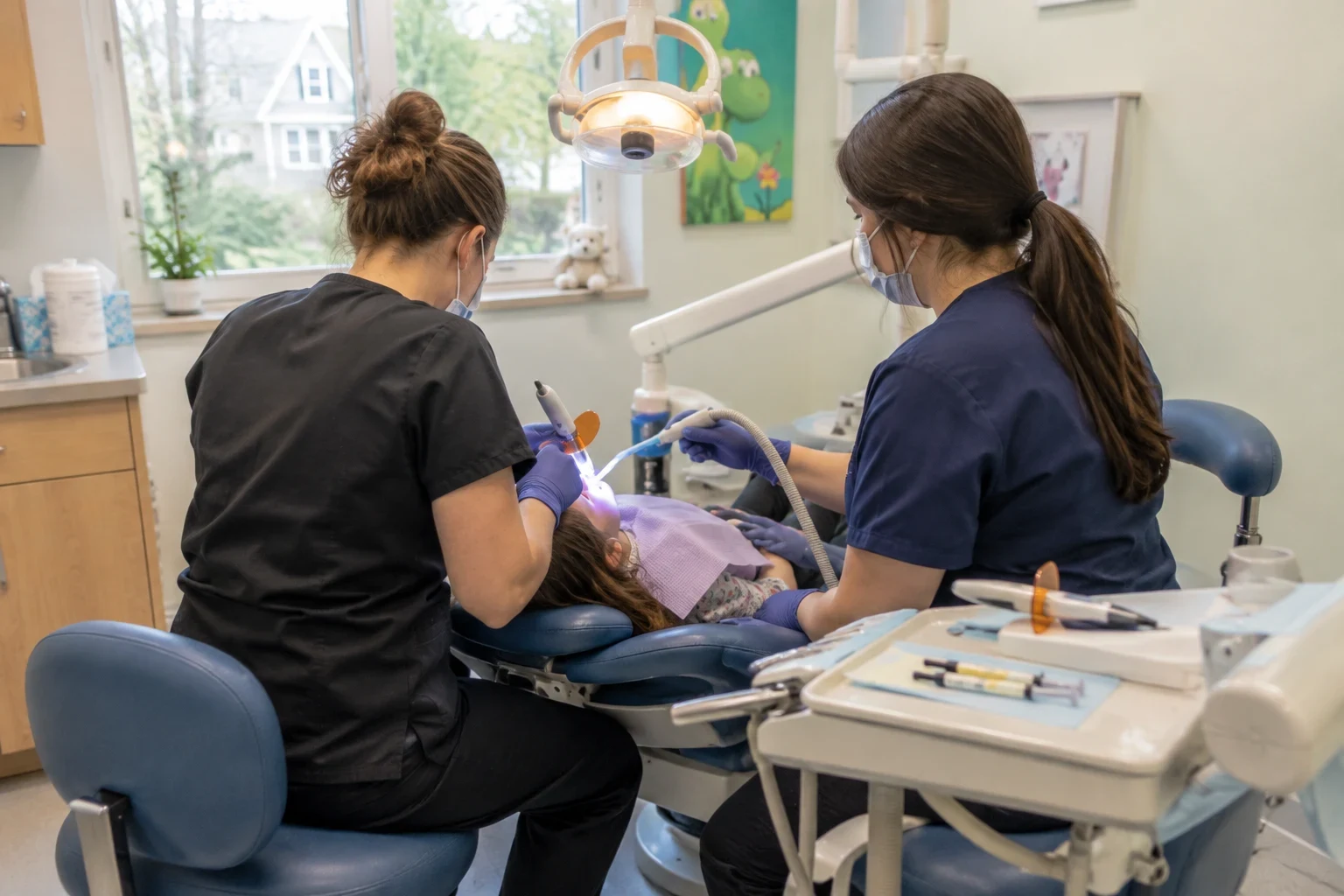
A cavity caught early needs only a small tooth-colored filling to stop the decay and keep your child's tooth working until it falls out on schedule. We numb gently, explain each step to your child, and call the next day about the bite and how to care for it.
What a filling does for a child's tooth
A cavity is a hole in the enamel and dentin made by acid from bacteria feeding on sugars. It does not heal on its own. A filling removes the softened tooth structure and replaces it with a material that seals the tooth against new bacteria. In baby molars this matters more than most parents expect. Primary enamel is about half as thick as adult enamel and the nerve sits closer to the surface, so decay can reach the pulp in months.
Baby teeth hold space for the adult teeth underneath and help kids chew and speak clearly. A back baby molar often stays until age 10 to 12, so a cavity found at age 4 has years to grow if it is left alone.
Our board-certified pediatric dentists bring 11+ years in practice to this work, and they choose materials and techniques for a child's mouth rather than scaling down adult dentistry. Families come to us from Acton, Maynard, Concord and the surrounding area.
What a filling visit includes
- Bitewing x-rays to size the cavity
- Cavities between back teeth hide where neither you nor a mirror can see. Bitewings show them as dark shadows in the enamel, so we know how deep the decay goes before we start and can show you the image.
- Gentle numbing
- We apply a flavored topical gel first, then give the local anesthetic slowly so it does not sting. We describe each step to your child in plain, kid-friendly words. For very anxious kids or a lot of work at once, our Sedation Dentistry page explains the options.
- Keeping the tooth dry
- A small rubber dam or isolation device keeps saliva off the tooth and keeps water and debris away from your child's throat. Composite adhesive weakens if the tooth gets wet during placement, so this step has a lot to do with how long the filling lasts.
- The right material for the tooth
- For most small and medium cavities we use composite resin, a tooth-colored material that adheres directly to the enamel. Near the gumline, or in a baby tooth that will be lost soon, glass ionomer can be the better choice because it tolerates moisture and slowly releases fluoride.
- Bite check and polish
- We have your child bite on thin marking paper to find any high spot. A filling that sits even slightly high can make a tooth sore for days, so we adjust it before your child leaves the chair.
- A next-day check-in
- We call the following day to ask about soreness and how the bite feels. We look at the filling again at your child's next visit for Exams & Cleanings.
Clues that point to a cavity
Dull white lines or dark pits
A matte white line hugging the gumline usually means the enamel is losing minerals. Brown or gray pits in the chewing grooves suggest decay has already broken through to the layer below.
A zing from cold or sweets
Once decay reaches the dentin, tiny tubules carry cold and sugar straight toward the nerve. A quick flinch at ice cream or juice is worth a look.
Floss that shreds in one spot
If floss keeps catching or food wedges into the same gap meal after meal, there may be a cavity on the side of a molar.
Favoring one side
Young kids rarely say a tooth hurts. More often they move food to the other side or quietly stop eating crunchy foods they used to like.
Spotted on x-rays, no pain yet
Many cavities stay silent until they are large. One found on bitewings at a routine visit is the easiest kind to fill.
What affects the cost of a filling
The cost depends mostly on how much of the tooth the decay touched and which material fits that tooth. We walk you through the plan and what your insurance is likely to cover before we begin. For payment, most insurance plans work with our office, and you can also use a Visa, MasterCard or Discover card or the CareCredit Patient Payment Plan.
Number of surfaces
Fillings are billed by how many sides of the tooth they cover. A cavity in a chewing-surface groove is one surface. Decay that wraps from the top into the side of a molar is two or three.
Material choice
Composite resin and glass ionomer are placed differently and are coded differently by insurance plans, which can change your share of the cost.
How many teeth need work
Several cavities on the same side of the mouth can often be filled in one visit with one round of numbing, which saves a trip.
Sedation, if needed
If your child needs nitrous oxide or another form of sedation to stay comfortable, that is a separate charge.
How a filling appointment goes
- 1
We show you what we found
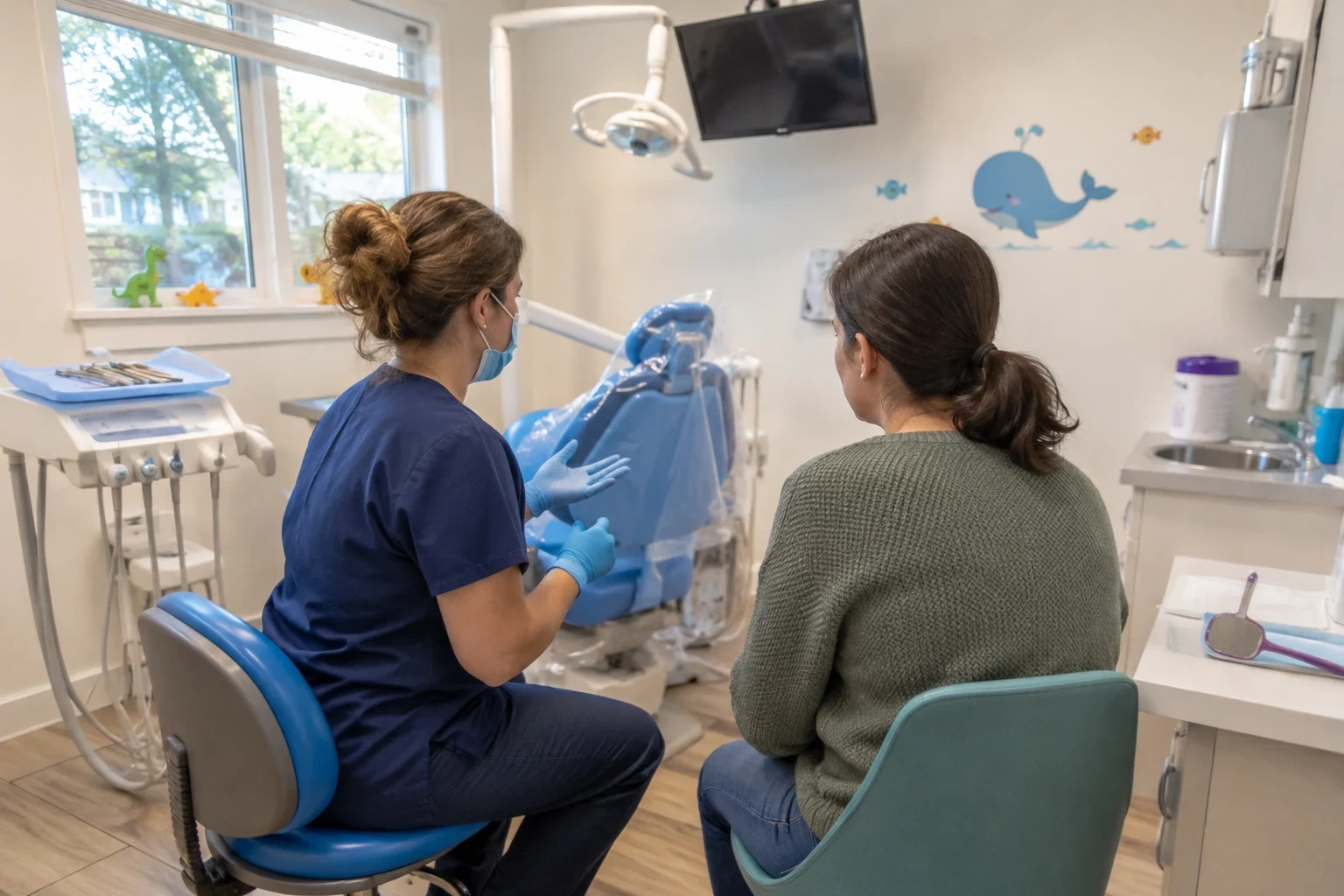
We go over the x-ray and the tooth with you, explain the size of the cavity and which material we recommend, and answer questions before anything starts.
- 2
Numbing and isolation
Once the topical gel and local anesthetic take effect, we place the rubber dam or isolation device. Most kids watch a show or hold a toy during this part.
- 3
Removing decay and placing the filling
We remove only the softened tooth structure, then place composite in thin layers and harden each layer with a blue curing light. Thin layers shrink less as they set, which helps the edges stay sealed.
- 4
Bite check and care talk
We adjust the bite and polish the surface. Then we explain the numbness, which usually lasts two to three hours, and how to keep your child from chewing a numb lip or cheek.
- 5
We check back
The next day we call to see how your child is doing and repeat any care tips you want to hear again. If anything feels off, we set up a time to adjust it.
Questions parents ask about fillings
Why fill a baby tooth that is going to fall out?
Back baby molars often stay until age 10 to 12. Left alone, a cavity can spread to the nerve and cause pain or infection, and it can spread to the tooth next to it. Losing a baby molar early also lets nearby teeth drift into the space the adult tooth needs.
Will my child feel the filling?
With the topical gel and local anesthetic, kids feel pressure and vibration but not pain. Most of the discomfort parents worry about comes from the injection, which is why we give it slowly and talk your child through it.
What can my child eat after a filling?
Composite and glass ionomer are hardened before your child leaves, so the filling itself is ready right away. Wait until the numbness wears off before eating so your child does not bite a lip or cheek, and start with soft foods. Mild soreness for a day or two is normal.
How long will the filling last?
In a baby tooth, a well-sealed filling often lasts until the tooth falls out. In a permanent tooth it can last many years. Brushing, flossing and fewer sugary drinks between meals help, and we check the edges at every exam.
What if the cavity is too deep for a filling?
If decay has reached the nerve or left too little tooth to hold a filling, we will tell you plainly. Treatment may involve pulp therapy, covered on our Root Canals page, followed by a cap as described on our Pediatric Crowns page.
How do we keep from needing another one?
Sealants protect the deep grooves on molars, where most children's cavities start, and Fluoride Treatment helps harden early soft spots. We will go over which of these fits your child at the check-in call.
Get that cavity taken care of
A small cavity is a short, comfortable visit. Phone us to set up an appointment, and we will call the next day to see how your child is doing.