ServicesSedation Dentistry
Sedation Dentistry for Kids in West Concord
Some kids need more than a gentle voice and a TV on the ceiling to get through treatment. We use sedation to keep your child calm and still, monitor them the whole time, then check in by phone to see how recovery is going.
What sedation does, and when it makes sense
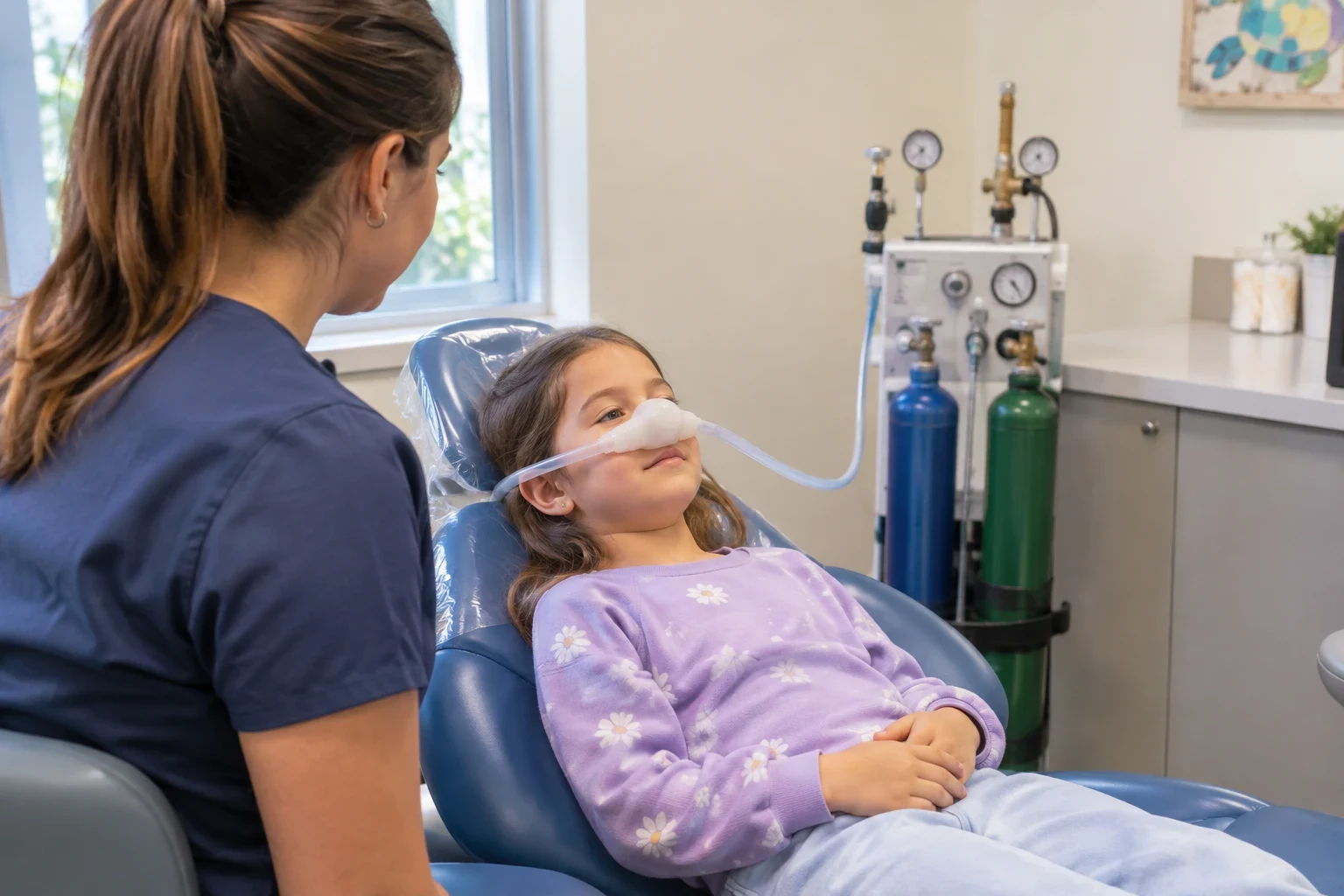
Sedation lowers a child's anxiety and awareness so the dentist can work carefully on teeth that need fillings, crowns or extractions. It does not replace numbing. The local anesthetic still blocks pain at the tooth, while the sedation keeps your child relaxed enough to let it happen.
The lightest option is nitrous oxide, often called laughing gas, a mix of nitrous oxide and oxygen breathed through a small nose mask. It takes effect within a few minutes and clears quickly once we switch to pure oxygen. For kids with heavier treatment needs or stronger fears, we talk through deeper options and explain why one fits better than another.
Our dentists decide on sedation case by case, based on your child's age, health history, temperament and how much work is needed. If a simpler approach will do the job, we tell you that.
What sedation care includes
- Health history and weight check
- We review medications, allergies, breathing issues and past reactions to anesthesia. Dosing for some sedatives is based on body weight, so we weigh your child rather than guess.
- Written pre-visit instructions
- You get clear instructions on eating and drinking before the appointment, what to wear and when to arrive. Sticking to the fasting rules matters because an empty stomach lowers the risk of vomiting under sedation.
- Monitoring during treatment
- A pulse oximeter on your child's finger tracks oxygen level and heart rate throughout. Our team watches breathing and responsiveness the whole time, not just the screen.
- Planned treatment in fewer visits
- When several teeth need work, we often group them into one sedated appointment so your child goes through the process fewer times.
- Recovery and a check-in call
- Your child stays with us until they are alert enough to leave. We go over care instructions before you go, then call to answer questions and make sure recovery is on track.
Signs your child may do better with sedation
Strong fear of the dental chair
Crying, panicking or refusing to open at past visits is common, and forcing it can make the next visit harder. Sedation can break that cycle.
Several cavities at once
Long or multi-tooth treatment is hard for any child to sit through. Sedation lets us finish more work safely in one appointment.
Very young age
Toddlers can't hold still or take directions for long, which makes precise work on small teeth difficult without help.
A strong gag reflex
Kids who gag on the suction or the X-ray sensor often settle with nitrous oxide.
Sensory sensitivities or special health care needs
Bright lights, sounds and touch can overwhelm some children. Sedation can make treatment tolerable when other approaches haven't worked.
What affects the cost of sedation
Sedation is billed separately from the dental work, and the fee depends mainly on which kind is used and how long your child needs it. We accept MasterCard, Visa, Discover, most insurance plans and CareCredit Patient Payment Plan. Before the visit, we go over the whole plan by phone or at the consultation so you know what it covers.
Which sedation is used
Laughing gas needs the least medication and setup of any option we offer. Deeper sedation calls for more medication, more preparation time and closer monitoring, and that adds to the fee.
Length of treatment
A single small filling takes far less time than restoring several teeth, and sedation time scales with the work.
Insurance coverage
Plans differ on whether sedation is covered and for which ages or conditions. We can help you check your benefits before the appointment.
Combining work into one visit
Grouping treatment into one sedated appointment can mean fewer separate sedation fees than spreading it over several visits.
Sedation, step by step
- 1
Exam and treatment plan
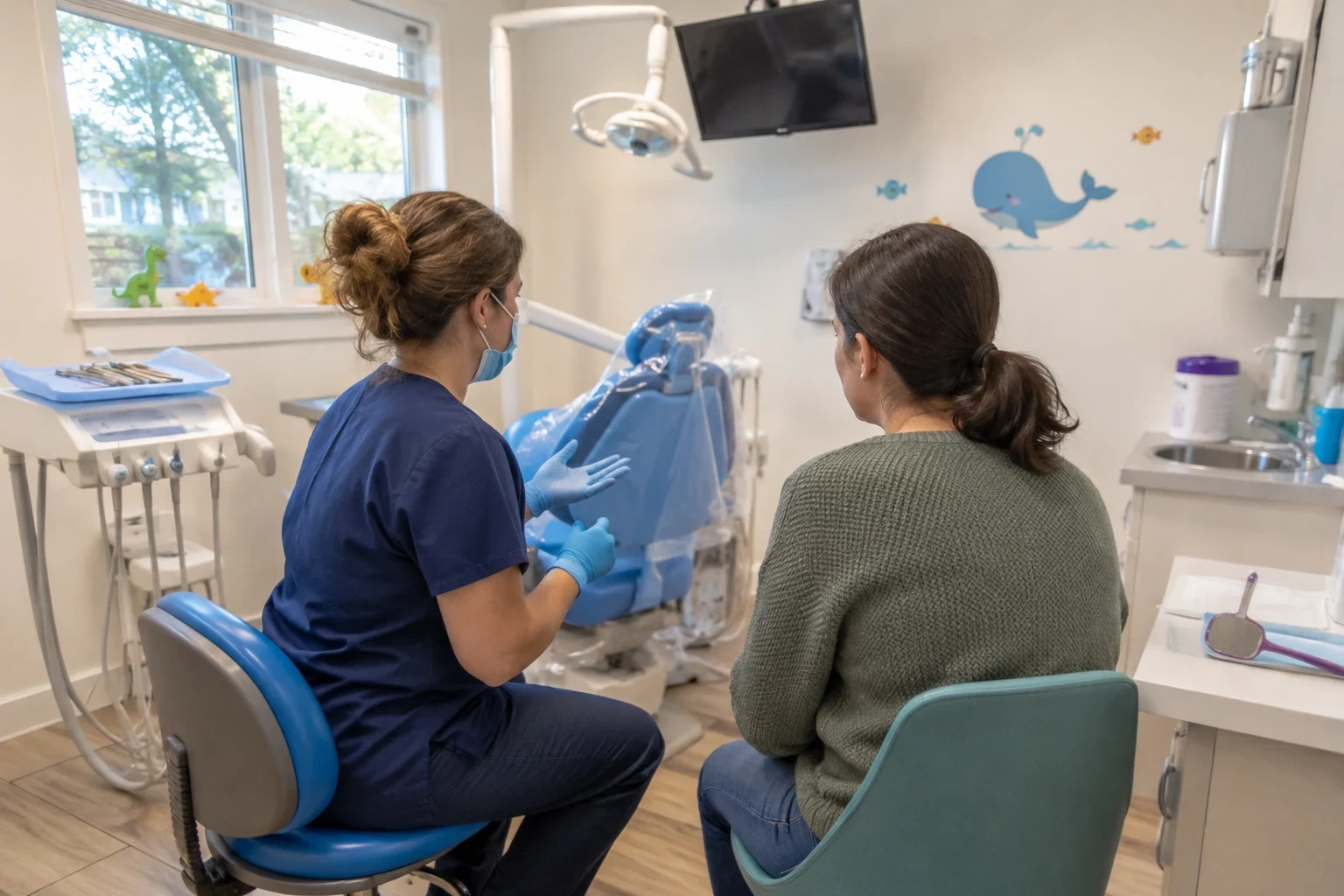
Before anything is booked, the dentist looks at your child's teeth, takes X-rays if they are needed and walks you through which teeth need work and which type of sedation fits. Bring your questions; there is time set aside for them.
- 2
Getting ready the day before
Stick to the eating and drinking instructions exactly, dress your child in loose, comfortable clothes and let us know if they develop a cold or stuffy nose. Congestion can interfere with breathing through the nose mask, so we may reschedule.
- 3
Treatment day
We give the sedation, wait for it to take effect, numb the area and complete the planned work while monitoring your child throughout. A parent or caregiver stays close by according to the plan we discussed.
- 4
Recovery before you leave
We keep your child with us until they can respond normally. You leave with written care instructions covering food, activity and numbness.
- 5
Our follow-up call
We phone to ask how your child is eating, sleeping and feeling, and we explain how to care for the new fillings or crowns going forward.
Questions parents ask about sedation
Is sedation safe for my child?
When it is chosen carefully, dosed correctly and monitored, sedation has a strong safety record in pediatric dentistry. We review your child's health history first and track oxygen and heart rate throughout. If anything in that history raises a concern, we will discuss it with you before going ahead.
Will my child be asleep?
With nitrous oxide, no. Kids stay awake, can respond and usually feel relaxed or a little giggly. Deeper sedation makes children drowsy, and we explain exactly what to expect for the option we recommend.
Can my child eat before the appointment?
It depends on the type of sedation. We give you specific written instructions on when to stop food and drinks, and sticking to them closely is important for safety. If your child has eaten when they shouldn't have, we will need to reschedule.
How long until my child is back to normal?
Nitrous oxide clears within minutes once the mask comes off. Deeper sedation can leave a child sleepy for the rest of the day, so plan quiet time with an adult watching them. Numbness from the local anesthetic can last a few hours, so watch for lip and cheek chewing.
How experienced are you with sedation for kids?
We have 11+ years in practice caring for children, and our dentists are board-certified pediatric dentists. The dentist treating your child makes the sedation decision, after an exam and a conversation with you.
Talk with us about sedation for your child
We will listen to what happened at past visits, explain the options and set up a consultation. New patients from West Concord, Acton, Concord and nearby towns can register by phone.