ServicesSealants
Dental Sealants for Kids in West Concord
Sealants fill the deep grooves on your child's back molars, where a toothbrush bristle is too wide to reach. Placing them takes a few minutes per tooth with no drilling or numbing. We check each one at later cleanings and touch it up if it wears.
What a Sealant Does and Why Molars Need It
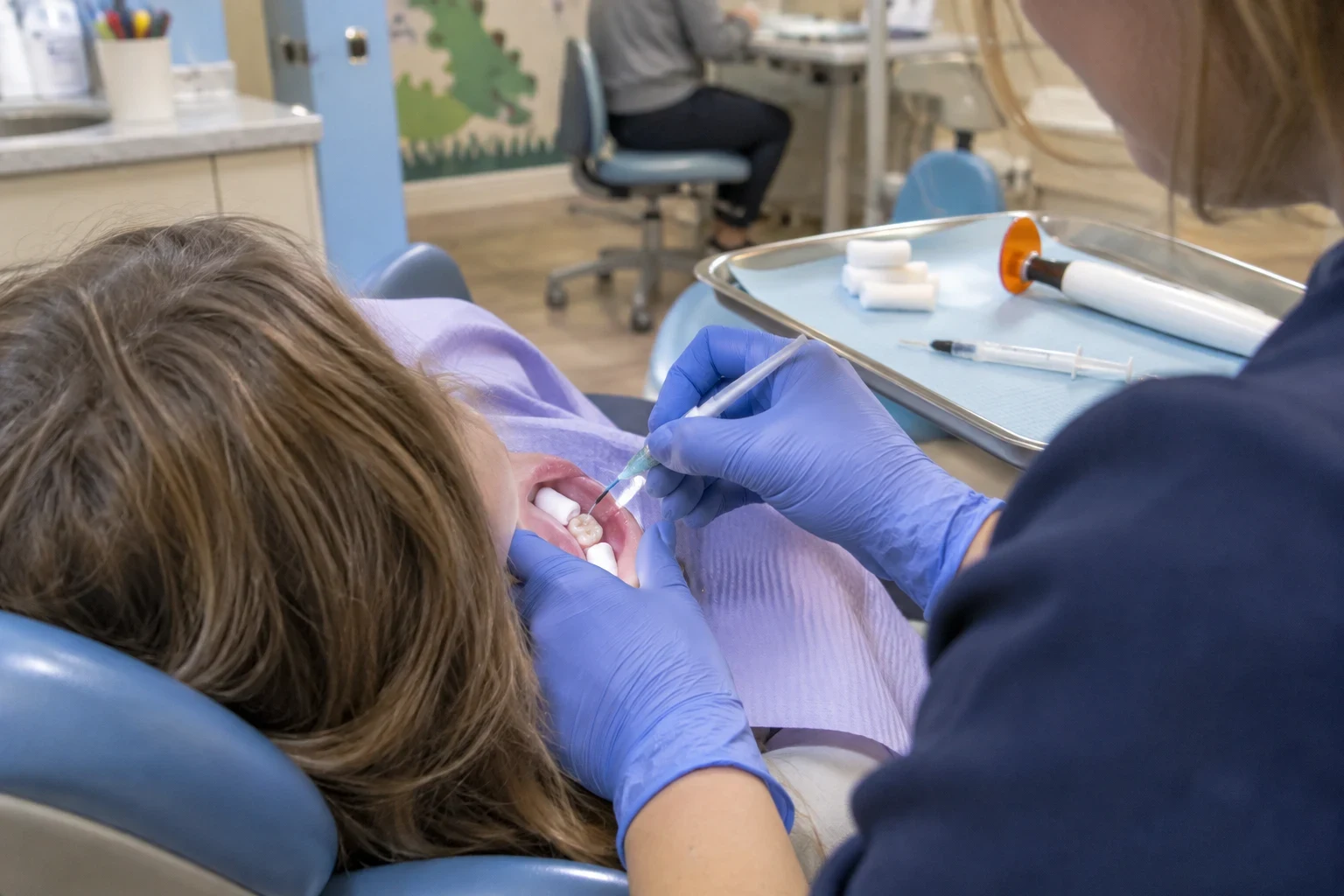
The chewing surface of a molar is not flat. It is covered in pits and fissures, narrow grooves that can be thinner than a single toothbrush bristle. Plaque and food settle into the bottom of those grooves, bacteria turn sugar into acid there, and decay often starts in exactly that spot. A sealant is a flowable resin that we bond into the grooves and harden with a curing light. It turns a deep, hard-to-clean fissure into a smooth surface your child can actually brush clean.
Timing matters. The first permanent molars usually come in around age 6 and the second molars around age 12, and newly erupted enamel is at its most vulnerable in the first few years. We aim to seal those teeth soon after they are fully in. Some kids with deep grooves on their baby molars benefit too, and we will tell you plainly when we think a sealant is worth it and when it is not.
Our board-certified pediatric dentists place sealants as part of a prevention plan that also includes cleanings and fluoride treatment. A sealant protects the chewing surface only, so brushing and flossing still do the work on the sides of the teeth.
What Your Child's Sealant Visit Includes
- 01
A groove-by-groove check first
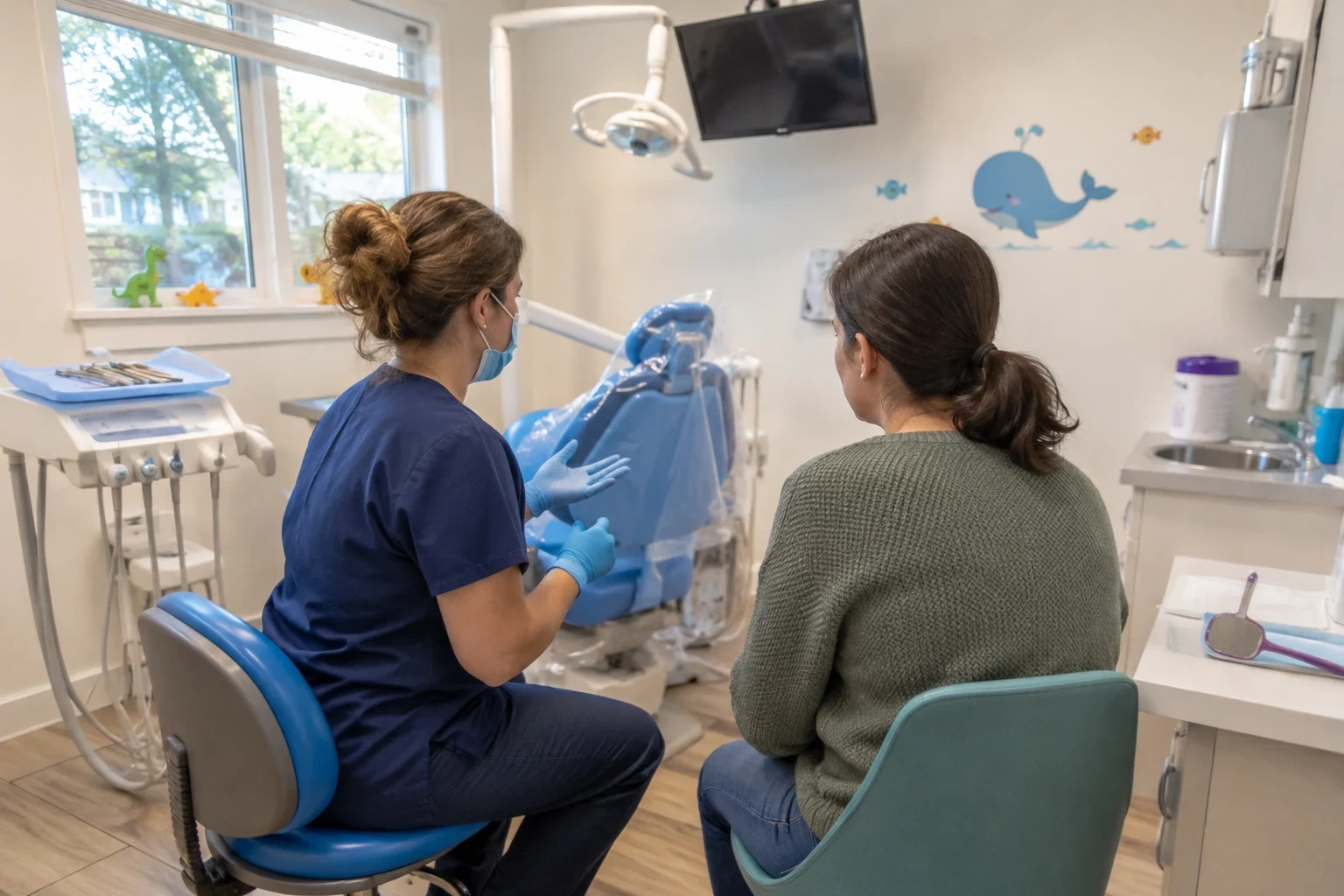
Before sealing, we look closely at each fissure and use X-rays from the exam when we have them. If a groove already has early decay, sealing over it is the wrong answer, and we will explain the alternative.
- 02
Resin or glass ionomer, matched to the tooth
Most teeth get a resin sealant, which bonds strongly and lasts well. For a molar that is only partly erupted and hard to keep dry, a glass ionomer sealant can be a better short-term choice because it tolerates a little moisture and releases fluoride.
- 03
No needles, no drill
The enamel is cleaned and prepared, not cut. Most kids find the hardest part is keeping their mouth open for a few minutes.
- 04
A bite check before you leave
We have your child bite on thin marking paper and smooth any high spot so the bite feels normal right away.
- 05
Rechecks at every recall visit
At each six-month exam we look at every sealant for chips, wear or gaps at the edges. Small losses are patched in minutes, which keeps the original coverage working instead of starting over.
Questions about Sealants?
Call(978) 607-3830Signs Your Child Could Use Sealants
New back molars have come in
Six-year and twelve-year molars are the classic candidates. Their grooves are deepest and their enamel is youngest.
Food stays packed in the grooves
If you see dark specks or bits of food sitting in the top of the molars after brushing, the fissures are deep enough to trap debris.
A history of cavities
Kids who have needed fillings before are more likely to get new decay. Sealing the remaining healthy grooves lowers that risk.
Brushing the back teeth is a struggle
Younger kids often miss the far molars, and braces make it harder still. A sealed surface is more forgiving of imperfect technique.
Staining in the fissures
Light brown lines in a groove can be harmless stain or the start of decay. We check which it is before deciding between a sealant and a small filling.
How Sealants Are Placed, Step by Step
- 1
Clean the surface
We polish the chewing surface to remove plaque and food from the bottom of the grooves. The resin has to touch bare enamel to bond.
- 2
Isolate and etch
We keep the tooth dry with cotton rolls or a small isolation device, then apply a mild etching gel for a few seconds. It creates microscopic texture in the enamel, rinses off and leaves the tooth looking chalky. Saliva on that surface is the main reason sealants fail, so this step gets our full attention.
- 3
Flow and cure
The liquid sealant is brushed into the pits and fissures and hardened with a blue curing light in about 20 seconds per tooth.
- 4
Check the bite and explain care
We test the bite, smooth any high spots and tell you what to watch for. Your child can eat and drink normally as soon as the visit ends.
What Moves the Price of a Sealant Visit
Each tooth is charged on its own, so the biggest piece of the bill is simply how many teeth need sealing. Many insurance plans treat sealants on permanent molars as preventive care, but every plan sets its own age limits and list of covered teeth. We accept MasterCard, Visa, Discover, most insurance plans and CareCredit Patient Payment Plan. Give us a call before the appointment and we will walk through your coverage with you.
- How many molars are ready
- A visit for the two lower six-year molars that just came in is smaller than one that seals all four first molars and a few premolars at once.
- What the grooves look like up close
- A fissure with early decay can't simply be sealed over. It may call for a small preventive resin filling instead, which is a different procedure with its own charge.
- The terms of your plan
- Coverage often depends on your child's age and which teeth are being sealed. We review those details ahead of time so the bill matches what you expected.
- Touch-up or full replacement
- Filling in a small chip during a six-month checkup takes less time and material than redoing a sealant that has worn away entirely. Catching wear early at each recall visit keeps it in the simpler category.
Sealant Questions From Parents
Does getting a sealant hurt?
No. There is no shot and no drilling. The etching gel tastes a little sour and the cotton rolls feel odd, but most kids are finished before they get restless. We have 11+ years in practice explaining each step to kids in words they understand, and that goes a long way.
How long do sealants last?
A well-placed resin sealant can protect a tooth for several years, but chewing and grinding wear it down over time. That is why we inspect every sealant at each six-month exam and fix small chips before decay can start underneath.
Can my child eat right after?
Yes. The curing light fully hardens the sealant before your child leaves the chair. We do suggest skipping ice chewing and very hard candy, which can chip the edges.
Does a sealant replace brushing or fluoride?
No. A sealant only covers the chewing grooves. The smooth sides of the teeth and the spaces between them still rely on brushing, flossing and fluoride. We often pair sealants with a fluoride treatment at the same visit.
Why does a sealed tooth look a little white or shiny?
Some sealant materials are clear and others are tinted white so we can spot them easily at checkups. Either way, the sealant sits down in the grooves and does not show when your child smiles.
Seal the Grooves Before Decay Finds Them
Families come to us from West Concord, Acton, Maynard and nearby towns for sealants placed with care and followed up at every visit. A short phone call gets your child registered and on the schedule.