ServicesFrenectomies
Frenectomies in West Concord
A frenectomy releases a tight band of tissue under the tongue or upper lip so your child can feed, speak and clean their teeth more easily. We examine how the tissue moves, explain whether release will help, and check back on healing afterward.
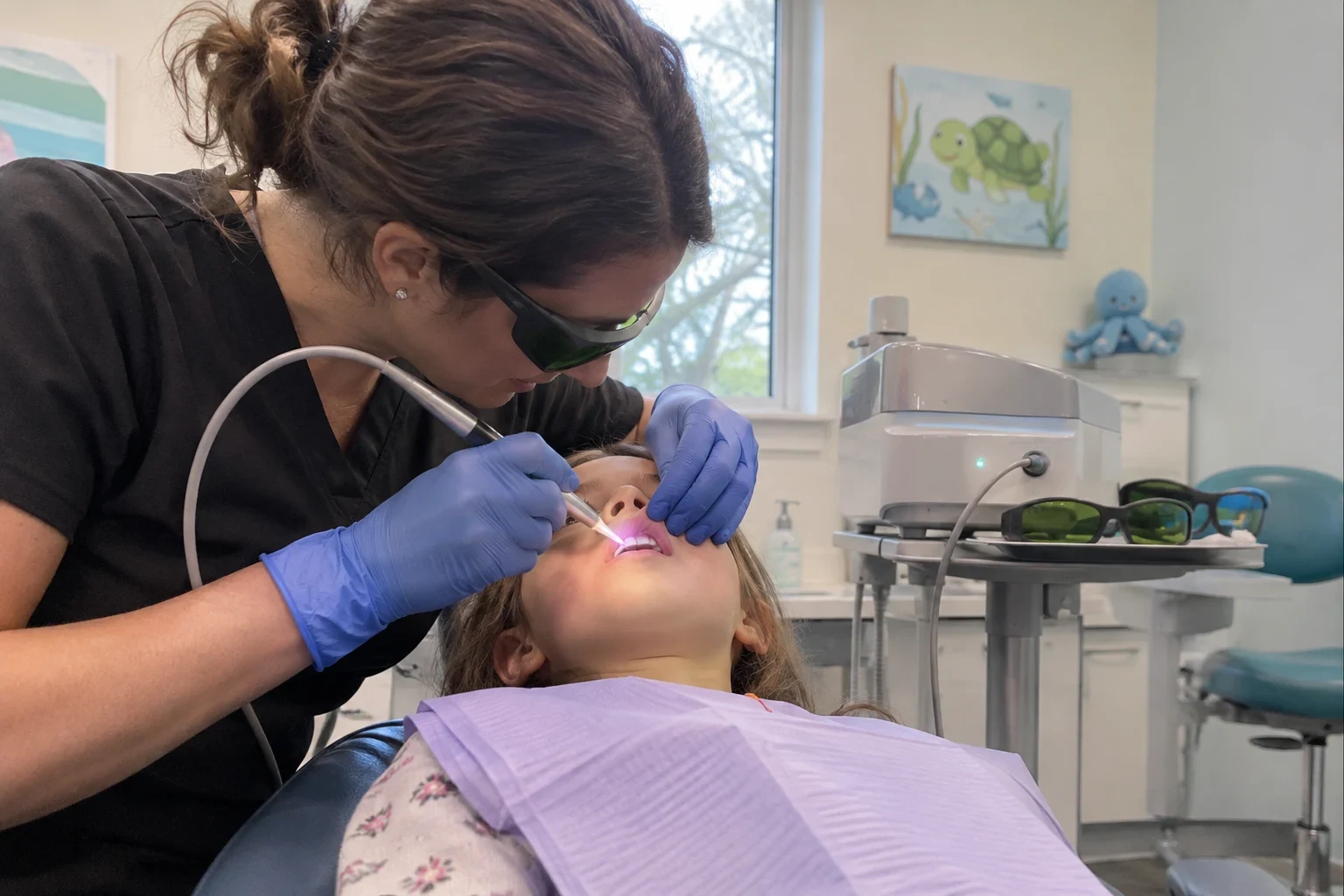
What a Frenectomy Is and When It Helps
A frenulum is the thin fold of tissue that anchors a soft structure to the mouth. The lingual frenulum ties the underside of the tongue to the floor of the mouth. The labial frenulum connects the upper lip to the gum above the front teeth. When either one is short, thick or attached too far forward, it can hold the tongue or lip in place. Doctors call this a tongue-tie or lip-tie, and a frenectomy releases that band.
Appearance alone is not a reason to treat. Many short frenula cause no trouble at all. We look at function: how far the tongue lifts and extends, whether a baby can hold a deep latch, whether a lip-tie traps food against the front teeth or keeps a gap between them. If release is unlikely to change anything, we tell you so and explain what to watch for instead.
Our board-certified pediatric dentists have more than 11 years in practice, and much of this work is the part after the procedure. A released frenulum heals from the edges inward and can tighten again if it is left alone, so we show you the stretches and see your child again to confirm the wound is healing open.

What the Frenectomy Visit Includes
- 01
Functional exam
We measure tongue lift and extension, check the lip's range, and ask about feeding, speech or cleaning problems you have noticed. For babies, we also look at latch and sucking pattern.
- 02
A clear recommendation
You get a plain answer on whether release is likely to help, which frenulum is involved, and what the healing period asks of you. If the tie is mild, we may suggest waiting and rechecking.
- 03
The release itself
The procedure is short, usually a few minutes of actual treatment time. We numb the area first, and for older kids who are anxious, sedation dentistry is an option we can discuss.
- 04
Written aftercare steps
Before you leave, we walk through the stretching exercises with you and give you written instructions, including how often to do them and how long to continue.
- 05
Check-back visit
We see your child again during healing to look at the wound shape and the range of motion. If the tissue is starting to reattach, we adjust the stretching plan right then.
- 06
Coordination with other providers
If a lactation consultant or speech therapist is involved, we can share our findings with them so everyone works from the same picture.
Questions about Frenectomies?
Call(978) 607-3830Signs Your Child May Have a Tongue-Tie or Lip-Tie
Shallow latch or clicking
Babies who click while nursing, slip off the breast, or tire quickly during feeds may not be able to cup the tongue well. Sore nipples for the parent can point to the same cause.
Heart-shaped tongue tip
When a child sticks out their tongue, a notch or heart shape at the tip often means the frenulum is pulling the center back.
Limited tongue lift
If your child cannot touch the roof of the mouth with the mouth open, the lingual frenulum may be restricting movement.
Trouble with certain sounds
Sounds such as t, d, l and r need the tongue tip to reach the ridge behind the upper teeth. A speech therapist may raise this before we do.
Food packing at the upper front teeth
A tight lip-tie can keep the upper lip from sweeping food off the front teeth, which leaves plaque in place and raises the risk of decay there.
Blanching when the lip is lifted
If the gum turns white when you gently lift the upper lip, the frenulum is under tension. That alone is not a reason to treat, but it is worth an exam.
How the Procedure Day Runs
- 1
Review and consent
We recheck the frenulum, answer your questions and go over the plan once more. Nothing happens until you are comfortable with it.
- 2
Numbing and positioning
We apply topical anesthetic and, for older kids, local anesthetic as needed. A caregiver or assistant helps keep your child steady, because small, still movements make the release precise.
- 3
Releasing the frenulum
The tight band is released until the tongue or lip moves freely. Bleeding is usually minimal and stops with light pressure.
- 4
Feeding and first stretch
Babies can often nurse or take a bottle right away, which also comforts them. We then show you the first stretch on your own child so the technique is clear before you leave.
- 5
Check-back during healing
A white or yellowish patch forms in the wound over the first days; that is normal healing tissue, not infection. At the follow-up visit we confirm the wound is staying open and the motion you gained is holding.
What Affects the Cost of a Frenectomy
The fee depends on which tissue is released and how much support your child needs during and after the visit. We go over the expected charges before treatment so nothing comes as a surprise. You can pay with a Visa, MasterCard or Discover card, and we work with most insurance plans as well as the CareCredit Patient Payment Plan.
- Which frenulum is involved
- Releasing only the lingual frenulum is a different procedure from releasing the labial one. Treating both at the same visit changes the fee.
- Your child's age and comfort needs
- Infants usually need only topical numbing. Older kids may need local anesthetic, and some do better with sedation, which adds to the cost.
- Insurance documentation
- Coverage often hinges on showing a functional problem, such as feeding or speech difficulty. We record our findings so you can share them with your plan, though the plan makes the coverage decision.
- Follow-up visits
- Most children need one check-back visit. If healing needs closer watching, an extra visit may be added.
Frenectomy Questions from Parents
Does a frenectomy hurt my baby?
We numb the area first, and the release takes only moments. Most babies fuss briefly and settle once they are feeding. Some tenderness for a few days is normal, and we tell you what comfort measures fit your child's age.
Why are the stretches so important?
Mouth tissue heals quickly, and a released frenulum tends to close back toward its old position as it heals. Gentle stretches keep the wound edges apart so the new range of motion holds. We show you exactly how and check the result at the follow-up visit.
Will a frenectomy fix my child's speech?
It can remove a physical restriction, but speech habits are already learned. Many kids still benefit from work with a speech therapist after release. We can share our findings with your therapist so the plan is coordinated.
Is a gap between the front teeth a reason to release a lip-tie?
Not on its own, especially in young children whose permanent teeth have not come in. A gap often narrows as the canines erupt. We usually recommend watching it and reconsidering once the adult front teeth are in.
How old does my child need to be?
We see newborns through teens for frenectomy evaluations. Babies with feeding trouble are often seen in the first weeks, while lip-ties that affect cleaning or speech may be addressed later. The right timing depends on the problem, not a set age.
Have Your Child's Frenulum Checked
Families from West Concord, Acton, Concord and nearby towns bring their kids to us for a careful look at tongue and lip movement. Register your child as a new patient, and we will schedule the exam and walk you through what comes next.