ServicesRoot Canals
Root Canals for Kids in West Concord
When decay reaches the nerve inside your child's tooth, we treat the pulp and keep the tooth in place until it is ready to come out on its own. Once it is done, we check back, explain how to care for the treated tooth, and watch it at every visit.
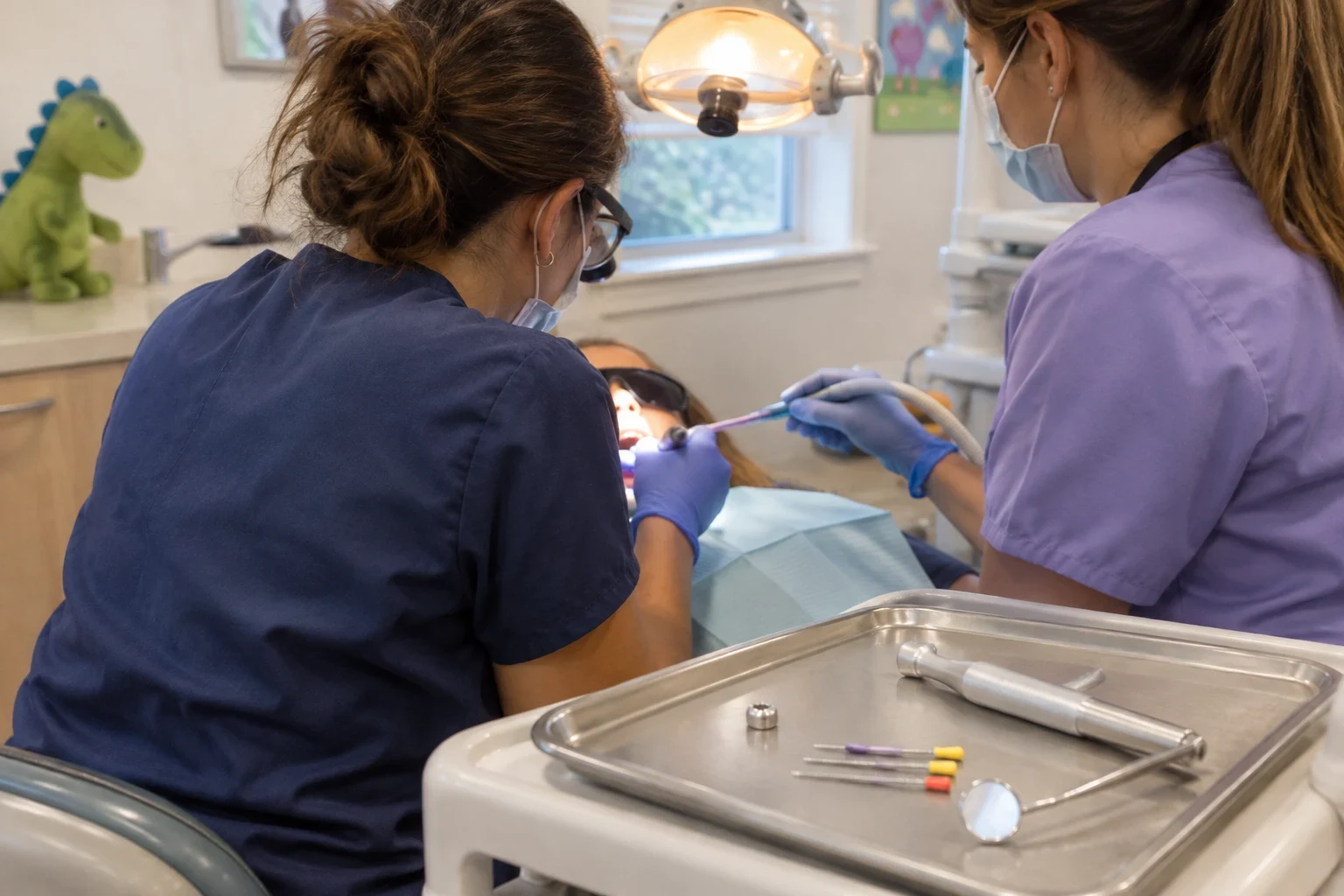
Why a baby tooth is worth saving
A baby molar holds space for the permanent tooth forming beneath it, and many stay in the mouth until age 10 to 12. Losing one early lets neighboring teeth drift into the gap, which can leave the adult tooth without room to come in. A pediatric root canal, more precisely called pulp therapy, removes the infected nerve tissue and lets the tooth keep holding that space.
There are two main versions. A pulpotomy removes only the inflamed pulp in the crown of the tooth and seals the healthy pulp left in the roots with a medicated material. A pulpectomy cleans pulp out of the crown and the root canals, then fills them with a paste that dissolves as the baby tooth's roots resorb naturally. For a young permanent tooth whose roots are still forming, we choose treatment that lets the root keep growing.
Our board-certified pediatric dentists decide from X-rays and from how the tooth responds. If a tooth is too far gone, we say so and explain why an extraction with a space maintainer is the better plan.
What the treatment includes
- X-rays of the roots
- Images show how deep the decay runs, whether infection has reached the bone between the roots, and how much root is left. That tells us if the tooth can be saved and which procedure fits.
- Numbing, with sedation when it helps
- We start with a topical gel so the injection is barely felt, then a local anesthetic. For anxious kids or longer visits, the options on our Sedation Dentistry page are available.
- A rubber dam to isolate the tooth
- A thin sheet around the tooth keeps saliva and bacteria out of the open pulp chamber. It also stops water and small instruments from reaching the back of your child's throat.
- Pulp removal and a medicated seal
- We remove the infected tissue, disinfect the chamber, and place a biocompatible material that keeps the remaining tooth healthy.
- A crown to finish the job
- A treated molar loses much of its inner structure and becomes brittle, so we usually cover it with a stainless steel or tooth-colored crown. You can read more on our Pediatric Crowns page.
- Follow-up and care instructions
- We go over what to expect that evening, check in with you the next day, and take a follow-up X-ray at later checkups to confirm the area is healing.
Signs the nerve may be involved
Pain that wakes your child at night
A toothache that starts on its own, without chewing or a cold drink, usually means the pulp is inflamed beyond what a filling can fix.
Sensitivity that lingers
A quick twinge from ice cream can be a shallow cavity. Pain that hangs on for a minute or more once the hot or cold is gone points deeper, toward the nerve.
A small bump on the gum
A pimple-like spot near the tooth that drains or comes and goes is a sign of infection draining from the root area.
Swollen gums or cheek
Puffiness near a decayed tooth means infection has spread past the tooth. Swelling that moves toward the eye or comes with fever needs prompt medical attention.
A tooth turning gray after a fall
A bump to the mouth can damage the blood supply inside a front tooth, and the pulp may die weeks later. Darkening is the clue.
How the appointment goes
- 1
Exam and a clear answer
We look at the tooth, take X-rays, and show you what we see. You hear whether we recommend a pulpotomy, a pulpectomy, or an extraction, and why.
- 2
Getting comfortable
We explain each step to your child in plain, kid-friendly words before we do it. Once the tooth is numb, we place the rubber dam.
- 3
Treating the pulp
We open the tooth, remove the infected tissue, disinfect, and seal it with the medicated material. A pulpotomy on a baby molar is often finished in a single visit.
- 4
Placing the crown
In most cases the crown goes on during the same appointment, so the tooth leaves protected and ready to chew.
- 5
Checking back
Your child stays numb for a few hours, so we ask for soft foods and watch for lip or cheek biting. Mild soreness can be eased with children's pain reliever dosed for their age. We follow up the next day and recheck the tooth at each six-month exam, a habit built over 11+ years in practice.
What affects the cost
The price depends on which tooth, how far the infection has gone, and what it takes to finish and protect it. We go over each part before treatment starts so the total is not a surprise. For payment, you can use a Visa, MasterCard or Discover card, we work with most insurance plans, and financing is available through the CareCredit Patient Payment Plan.
- Pulpotomy or pulpectomy
- Cleaning only the crown chamber is a shorter procedure than cleaning every root canal. Molars have more canals than front teeth.
- The crown you choose
- Stainless steel crowns and tooth-colored crowns differ in material and fitting time.
- Sedation
- Nitrous oxide or deeper sedation adds to the visit when a child needs it to stay comfortable and still.
- Insurance coverage
- Plans differ in how they classify pulp therapy and crowns for children. We can help you read what your plan covers.
Questions parents ask about kids' root canals
Something not covered here? (978) 607-3830
It's a baby tooth. Why not just pull it?
Sometimes pulling it is the right call, and we will tell you when. If the tooth has years left before it would fall out, keeping it holds the space for the adult tooth and lets your child chew normally. Removing it early often means a space maintainer to keep the gap open.
Will my child feel pain during the procedure?
The tooth is fully numb before we start, so kids usually feel pressure rather than pain. Most children feel better than they did before treatment, because the inflamed nerve causing the ache is gone.
What should my child eat after the appointment?
Stick to soft, cool foods like yogurt or applesauce until the numbness wears off. Once feeling returns, your child can eat normally, though very sticky candy can loosen a crown and is best avoided.
How do you follow up on the treated tooth?
We check in the day following treatment to see how your child is doing and answer questions. At later checkups we take an X-ray to make sure the bone around the roots stays healthy and the adult tooth is developing normally underneath.
Can a treated tooth get infected again?
It is uncommon when the tooth is sealed and crowned, but it can happen. A new bump on the gum or returning pain is a reason to bring your child in, and the regular rechecks are designed to catch problems early.
Have the tooth checked before it gets worse
A tooth with a deep cavity or a gum bump will not heal on its own. Bring your child in from West Concord, Acton, Concord or nearby, and we will tell you exactly what the tooth needs.